


Best Peer-Led Coaching for Ecommerce Founders Moving Off Amazon
The Best Peer-Led Coaching for Ecommerce Founders Moving Off Amazon should help you test new channels without treating Amazon as disposable or tying up cash in scattered expansion. Look for an operator-led room where experienced sellers compare decisions, pressure-test plans, and follow through.
Key Takeaways
- Effective peer coaching puts you in a room with operators who have already run the channel you are entering, so you can pressure-test expansion plans before spending inventory dollars.
- The right program treats Amazon as a cash engine that funds new channels, not an asset to abandon during diversification.
- Look for structures built around execution, such as weekly rooms and accountability cadences, because strategy without follow-through stalls momentum and burns runway.
- Access to a vetted network of operators shortens decision cycles on TikTok Shop, Shopify, and AI discovery compared with learning each channel alone.
- Judge any coaching offer on whether it improves profit, speed, and defensibility across channels rather than on course content alone.
When weighing coaching against a course or agency, ask who helps make decisions, what channel experience is available, and whether the support fits your inventory and cash-flow constraints.
Peer-led coaching brings ecommerce operators together to solve current business problems and hold one another accountable. A recorded course delivers a curriculum; an agency executes agreed services. For an Amazon seller adding Shopify, TikTok Shop, or AI-driven discovery, peer coaching applies experienced judgment to a real operating plan.
What peer-led coaching actually is (and how it differs from guru-led courses)
A peer-led program combines structured discussion with feedback from people running ecommerce businesses. Members can compare acquisition costs, fulfillment choices, creative testing, and channel economics against their own conditions. A course can explain a framework, but it cannot respond to a member’s stock position or challenge a launch plan in a working session.
Why Amazon sellers diversify now: fees, policy risk, and single-channel exposure
Rising Amazon fees make each product’s contribution margin worth reviewing before expansion. Research cited in the brief reports that up to a third of people selling on Amazon are actively losing money. Policy changes and marketplace dependence add exposure; a second channel can build customer relationships and reduce reliance on one source of demand, provided the unit economics work.
Who this guide is for
This comparison is for established Amazon sellers who understand advertising, replenishment, and contribution margin and need a measured path into other channels. Titan’s operating model keeps Amazon as The Cash Register: Amazon while connecting it to Product, TikTok Shop, AI and AEO, and Shopify. Amazon remains important, but is no longer the only focus.
How We Evaluated Peer-Led Coaching Programs for Amazon Sellers

We assessed programs by how well they help operators make and implement decisions across channels, rather than by course volume or promotional claims. Look for a clear format, member profile, and path from discussion to action. Verify current fees, access, and terms with each provider.
Our 5-point vetting criteria: operator density, channel depth, accountability structure, cash flow support, real exit stories
- Operator density: Are members active sellers with relevant operating experience?
- Channel depth: Does the group cover product development, Amazon, Shopify, TikTok Shop, and AI discovery where relevant?
- Accountability: Are there recurring working sessions and clear next steps?
- Cash flow support: Can members pressure-test inventory commitments, ad spend, and working capital?
- Evidence: Can the provider explain member outcomes without unverifiable promises?
Red flags that disqualify a program instantly
Be wary of guaranteed revenue claims, vague coach credentials, pressure to buy before seeing the format, or a one-size-fits-all playbook. A large community count alone does not prove useful operator access. Ask whether members discuss channel-specific trade-offs and whether support is live, recorded, one-to-one, or peer-based.
How peer-led programs differ in evaluation vs courses and agencies
Compare options by the job they perform. A course may suit a team needing a defined skill or reference library. Judge peer coaching by the quality of operator exchange and consistency of implementation support.
Request a sample agenda, participant profile, pricing terms, and cancellation policy. Match the offer to your bottleneck: strategy, specialized labor, or accountable decision-making. Do not pay for broad access if you need a narrow technical service.
Top Peer-Led Coaching Picks for Ecommerce Founders Moving Off Amazon
The right choice depends on your stage, channel mix, and appetite for structured peer access. Cohort size, coaching intensity, and channel coverage differ. Confirm availability and price with providers; the research supplied does not verify pricing for each named option.
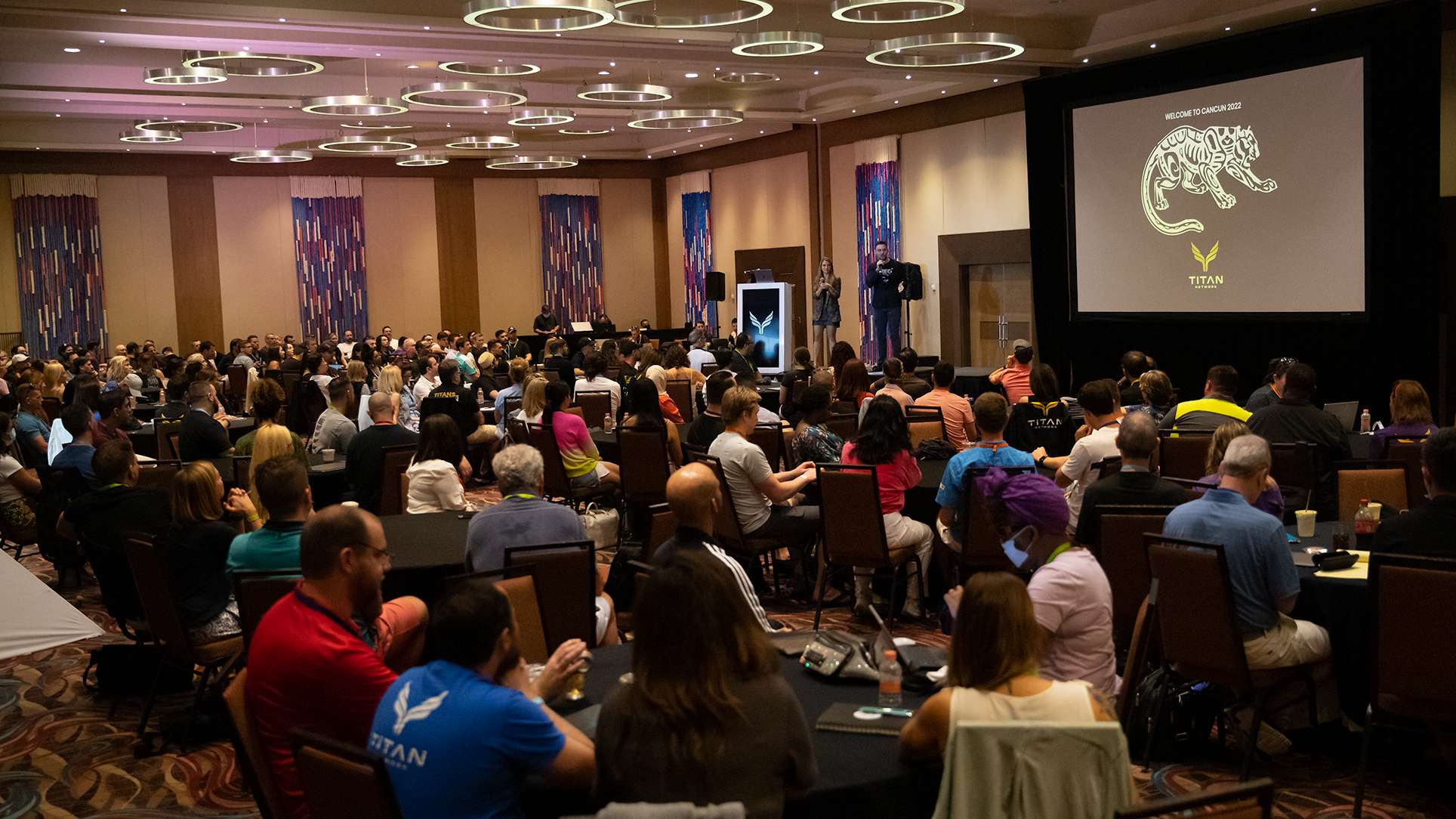
#1: Titan Network, 700+ vetted operators across the five-channel Omni system
Best for: Amazon operators building across Product, TikTok Shop, AI and AEO, Amazon, and Shopify. Titan Network connects weekly execution rooms, membership, coaching, Titan AI, and a vetted network of 700+ operators. The Cash Register: Amazon remains part of the system alongside channels that can diversify discovery and sales.
#2: EcomCrew Mastermind, Shopify-first peer cohort
Best for: Sellers prioritizing a Shopify transition and peer discussion around direct-to-consumer operations. The research brief describes a lean peer cohort. Confirm meeting frequency, member stages, and whether Amazon-to-Shopify inventory and customer acquisition fit the agenda.
#3: Seller Symposium Peer Circles, small-group format
Best for: Smaller sellers seeking a budget-conscious peer format. The supplied research characterizes these circles as budget-friendly and aimed at sub-seven-figure founders. Check whether the group has relevant channel expertise for your decision; a lower entry cost does not guarantee fit.
#4: 8 Figure Dreamer Mastermind, higher-touch coaching
Best for: Founders seeking more one-to-one attention and able to support a higher investment. The research brief characterizes this option as high-ticket and one-to-one-heavy. Ask what direct coaching includes and whether it covers your channel mix before comparing its premium with a peer cohort.
How do peer programs compare with coaching, agencies, and courses?
Use this comparison to identify the support your business needs. Costs and results vary; the available research does not establish like-for-like price or time-to-results benchmarks for the named programs.
| Format | Cost information available | Accountability | Channel coverage | Best fit |
|---|---|---|---|---|
| Peer-led program | Varies; confirm directly | Recurring peer discussion and, depending on program, execution sessions | Depends on member and coach expertise | Cross-channel decisions and operator feedback |
| One-to-one coaching | Varies; confirm scope and terms | Direct coach relationship | Depends on coach experience | Focused guidance for a defined constraint |
| Course | Research describes courses costing thousands | Primarily self-directed | Limited to curriculum scope | Learning a defined skill or process |
The Cost Math: Peer-Led Coaching vs Agencies vs Courses vs Going It Alone
Evaluate coaching against the cost of the decision it helps you make, not a course’s video count. Compare the fee, access to relevant operators, implementation support, and cash tied up while a new channel finds its footing.
Typical price ranges: $50-100 monthly peer circles to $30k+ masterminds to $10k+/mo agency retainers
These are broad reference points, not provider quotes. Confirm the full commitment, billing schedule, refund terms, and added fees before signing.
| Option | Typical cost context | Support model | Best fit |
|---|---|---|---|
| Course | Can cost thousands | Recorded instruction and reference material | Teams seeking a defined skill or repeatable process |
| Going it alone | No program fee; internal labor and testing still cost money | Founder-led research and execution | Operators with time and relevant in-house expertise |
Where agencies oversell and courses underdeliver for channel expansion
An agency can provide specialist labor, but a broad growth promise does not guarantee scope covering inventory planning, customer acquisition, creative, and channel economics. Ask for deliverables, decision rights, reporting cadence, and exit terms. A course can teach a framework, but cannot adjust advice to stockout risk or current contribution margin.
Match the format to the gap in your team. Choose a scoped agency engagement for execution capacity, a course for structured information, or peer coaching when the hard part is choosing and sequencing investments before committing cash.
Cash flow realities: inventory on TikTok Shop and Shopify before Amazon revenue carries you
Expansion can require cash before it returns cash: inventory, content production, fulfillment setup, and advertising may precede reliable sales. Keep Amazon as The Cash Register: Amazon while testing a controlled allocation for another channel. The Cash Register: Amazon remains part of the plan, not an assumption that makes every launch safe.
Cap test inventory and ad spend. Track sell-through, contribution margin, payout timing, and reorder needs by channel. Do not move stock or working capital away from a proven Amazon offer until the new channel shows enough demand to justify the trade.
A simple ROI framework for justifying coaching spend
Start with a decision coaching should improve: reducing wasted ad spend, avoiding an oversized inventory order, or choosing the next channel test. Estimate the downside of acting without relevant feedback, then compare it with the program fee and participation time. Do not count projected revenue as certain.
Set a review window and measures such as gross margin after advertising, inventory turns, customer acquisition cost, and cash conversion timing. Continue only if sessions produce implemented decisions and match the original need. Tie the investment to execution, not access alone.
Real Operator Lessons: Pitfalls and Success Patterns When Leaving Amazon-Only

Expand through controlled operating decisions, not a mandate to launch every channel at once. Protect existing product economics while testing new demand. In Titan’s five-channel system, Amazon remains a core channel, positioned as The Cash Register. A useful peer room can pressure-test inventory, margin, fulfillment capacity, and team bandwidth before spending. The goal is to add demand sources without weakening the business funding the transition.
Common pitfalls: spreading inventory too thin, ignoring TikTok Shop economics, treating Shopify like a second Amazon
Splitting limited inventory across channels can create stockouts, slow replenishment, or cash tied up in products that have not earned a reorder. Set a test allocation and review sell-through, contribution margin, fulfillment costs, and payout timing before shifting more units. TikTok Shop has its own content and creator workflow, so Amazon ad assumptions may not fit its economics.
Shopify is not another marketplace listing. The operator owns more of the storefront, customer experience, and acquisition decisions, so the team must plan for traffic, conversion, retention, and customer support. Keep the test small enough to learn without confusing gross sales with profitable demand.
Success pattern: sequencing channels one at a time with peer accountability checkpoints
Choose one expansion thesis, define the customer and offer, and cap the test for inventory, creative, and paid acquisition. Review product page conversion, customer acquisition cost, return rate, contribution margin, and cash conversion timing on a fixed cadence. If the test misses its guardrails, pause and diagnose before adding spend or stock.
Peer accountability turns intentions into dated actions. A weekly checkpoint can ask what changed, what the data says, and what decision comes next. Titan’s The Cash Register: Amazon remains part of the operating system as founders build channel depth elsewhere; it does not mean every expansion will work.
How peer rooms catch mistakes a course never will
A course can explain a launch framework; a live peer discussion can challenge assumptions behind a purchase order or campaign. Operators may spot a mismatch between planned content cadence and team capacity, or question whether a margin calculation includes fulfillment and returns. Feedback is not a guarantee of success; its value depends on relevant experience, candid discussion, and follow-through.
How long does an off-Amazon transition take? There is no reliable universal timeline. Pace depends on inventory position, team capacity, channel readiness, and whether early tests meet margin and cash-flow thresholds.
Do I need coaching after scaling Amazon alone? Not automatically. Coaching can help when decisions involve unfamiliar channel economics or need accountability beyond the founder’s team. Can peer coaching help with cash flow? Members can pressure-test inventory and spending plans, but cannot replace working capital or guarantee a favorable outcome. What if I am pre-seven figures? Define your constraint and verify the group’s member stage, cost, and format fit your resources before joining.
Frequently Asked Questions
What is peer-led coaching and why is it better than traditional courses for ecommerce founders?
Peer-led coaching brings active ecommerce operators together to pressure-test real decisions and hold each other accountable. A course delivers a fixed curriculum, but it cannot respond to your stock position, challenge your launch plan in a working session, or compare channel economics against your actual conditions.
How do I choose the right peer-led coaching program for moving off Amazon?
Judge programs on five criteria: operator density, channel depth across Shopify, TikTok Shop, AI discovery, and Amazon, accountability structure, cash flow support, and verifiable member outcomes. Ask for a sample agenda, participant profile, and pricing terms, and walk away from guaranteed revenue claims or vague coach credentials.
What are the common pitfalls when expanding beyond Amazon?
The biggest mistakes are treating Amazon as disposable, tying up cash in scattered expansion, and adding channels before the unit economics work. Review each product’s contribution margin first, keep Amazon productive as your cash register, and test new channels against your inventory capacity and customer ownership goals.
How much does peer-led coaching cost compared to agencies or courses?
Verify current pricing with each provider, and match the spend to your bottleneck: accountable decision-making needs peer coaching, specialized execution needs an agency.
Can peer-led coaching help with cash flow and operational challenges?
Yes, a strong peer room lets you pressure-test inventory commitments, ad spend, and working capital decisions with operators facing the same constraints. That live feedback matters most when you are funding a new channel while keeping Amazon replenishment and contribution margin intact.
Why are Amazon sellers diversifying into other channels now?
Rising Amazon fees, policy changes, and single-channel exposure are squeezing contribution margins, and research cited in our review reports that up to a third of Amazon sellers are actively losing money. A second channel builds direct customer relationships and reduces dependence on one source of demand.
Is peer-led coaching worth it for established seven and eight figure sellers?
For operators who already understand advertising, replenishment, and margin, peer coaching is worth it when the job is cross-channel decisions and execution accountability rather than information. Judge it by the quality of operator exchange and whether sessions produce clear next steps you actually implement.
Keep readingRead inside the Titan community →