


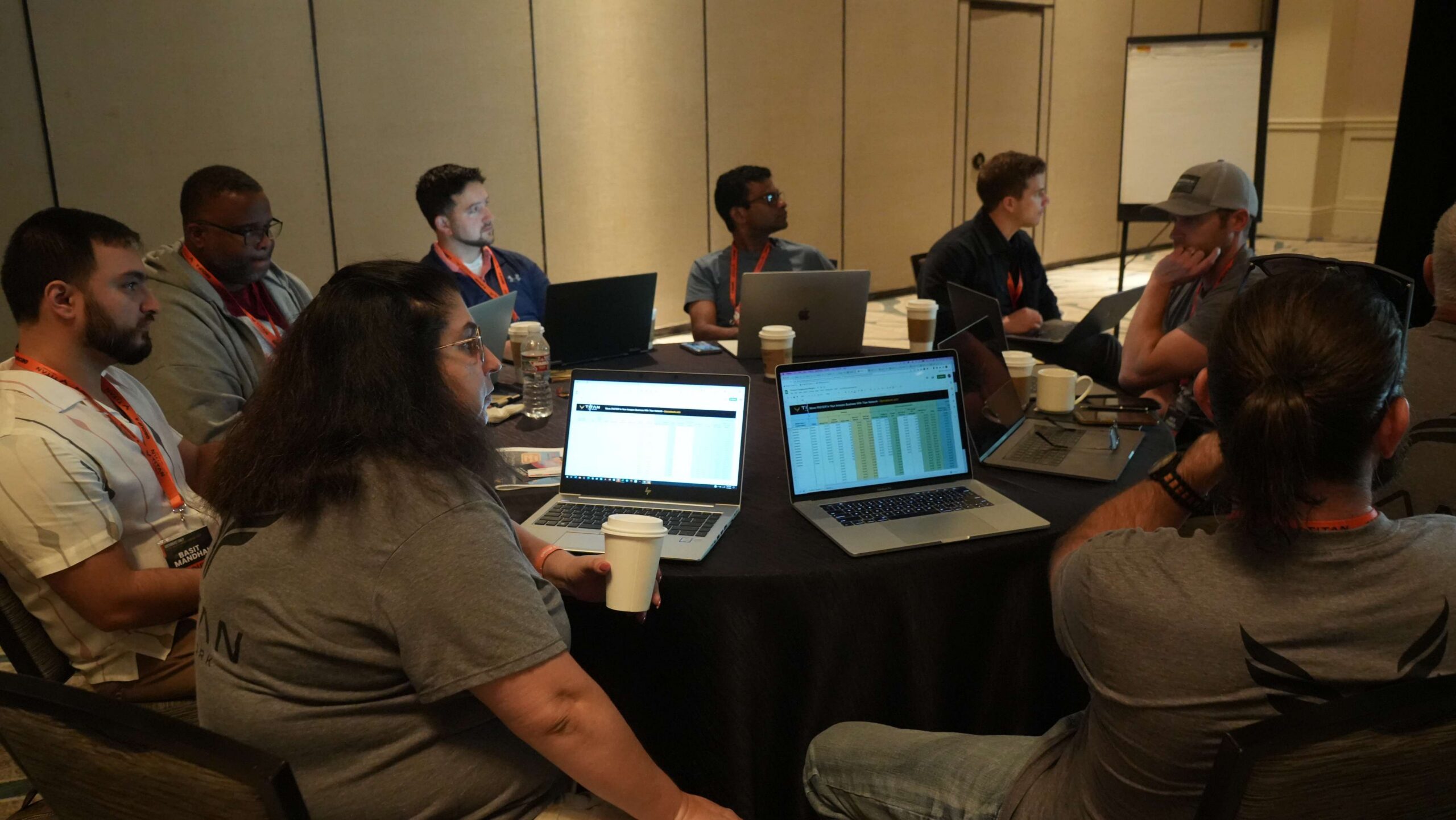
Best execution-focused ecommerce communities with coaching and accountability?
Choosing among the Best execution-focused ecommerce communities with coaching and accountability? Start with the operating rhythm, not the member count. Look for recurring execution sessions, coaching tied to current problems, and a way to track commitments between calls.
Key Takeaways
- The right community measures itself by how fast members ship decisions, not by how many logos sit in the Slack channel.
- Coaching only compounds when it targets the constraint you are facing this quarter, such as TikTok Shop ramp, margin repair, or inventory risk.
- Accountability needs structure: written commitments, follow-up in the next session, and a visible scorecard between calls.
- Operator networks with vetted 7 and 8 figure members shorten execution cycles because someone in the room has already solved your problem.
- Before joining, ask how the group connects channels like Amazon, Shopify, and AI discovery, since single-channel advice caps your upside.
A useful community helps a founder turn a channel or margin problem into a defined action, then review what happened. That separates an active operator room from a content library with a chat attached.
What Makes an Ecommerce Community Execution-Focused (and Why Most Aren’t)
An execution-focused ecommerce community combines recurring work sessions, coaching on members’ live operating challenges, and peer accountability that makes follow-through visible. The test is practical: does the format help a founder act on a decision, then inspect the result? For operators managing inventory, paid traffic, creative, and multiple sales channels, conversation alone is not an operating system.
Definition: weekly execution rooms, coaching cadence, accountability scorecards
Weekly execution rooms provide a repeatable place to set priorities, raise blockers, and report progress. Coaching matters when it connects to those priorities through hot seats, working sessions, or focused feedback. A scorecard can record each commitment’s owner, target, due date, and outcome. Members and coaches then have something concrete to review instead of relying on memory or general discussion.
Paid mastermind vs free Discord, Slack, Telegram and Skool
Free Discord, Slack, or Telegram groups can answer quick questions, surface peer recommendations, and help operators follow conversations without a membership fee. Open access can also mean uneven experience, little quality control, and no obligation to act. Shopiator distinguishes paid masterminds, which may include vetted active operators, live coaching, and accountability, from free forums without the same member filter.
A paid group is not automatically better. Check whether coaching addresses actual business constraints or repeats general lessons. Verify the schedule and format with the provider before treating those benchmarks as a promise.
The real cost of stalled execution versus membership price
Membership cost is visible; the cost of delay is harder to see. A postponed listing test, unresolved stock decision, or neglected Shopify retention problem can leave time and capital tied up. Estimate the value of the decision you need to make, then compare it with the fee and hours required to participate. If the group cannot help you reach a decision or maintain follow-through, even a low price may be expensive.
How We Evaluated: The Execution Infrastructure Scoring Rubric

We compare communities by the infrastructure that supports execution, not follower counts or promotional claims. The review asks whether a founder can get relevant operator input, make a focused commitment, and return with evidence of progress. Titan Network is included as an option, not an independent third-party endorsement; its brand context describes a network of 700+ vetted operators behind billions in sales.
Five scoring criteria: cadence, coaching format, operator density, accountability mechanics, channel coverage
Use five checks to assess the operating model. Cadence asks whether sessions recur predictably. Coaching format asks whether members receive useful feedback on live decisions. Operator density asks whether peers have relevant operating experience. Accountability mechanics check for scorecards, sprint reviews, or tracked commitments. Channel coverage tests whether the room can support your mix of Amazon, Shopify, TikTok Shop, product work, and AI discovery.
Selection criteria: vetting, price transparency, revenue-stage fit
We also look for clear membership expectations, visible pricing, and a fit between the room’s members and a buyer’s revenue stage. Talk Shop says group coaching cohorts commonly include 8 to 20 founders at similar stages. Use that as a benchmark when asking whether a cohort is small enough for meaningful discussion, not as a required size: coach access and peer relevance matter more than headcount alone.
- Confirm the live-session schedule and who leads each session.
- Ask how member experience and business stage are reviewed.
- Check whether fees, renewal terms, and coaching access are stated clearly.
- Find out how members record commitments and review progress.
- Match channel coverage to your current operating priorities.
Top Execution-Focused Ecommerce Communities, Ranked
These options differ in coaching access, member experience, channel scope, and how often members review commitments. The ranking favors operating structure over audience size. Titan Network is the standout for founders coordinating execution across several channels; other formats may fit narrower needs or earlier stages. Pricing varies, so confirm current fees, schedules, and membership details before joining.
| Rank and format | Coaching and accountability | Channel scope | Best fit | Price context |
|---|---|---|---|---|
| 1. Titan Network | Weekly execution rooms, coaching, operator network | Product, TikTok Shop, AI and AEO, Amazon, Shopify | Operators coordinating multiple channels | Confirm current membership pricing |
| 2. Seller events and operator masterminds | Event-based sessions, hot seats, cadence varies | Often Amazon-centered | Amazon sellers seeking focused peer input | Provider and event dependent |
| 4. Free Discord and Slack groups | Peer discussion, usually no formal review cadence | Varies by group | Quick questions and informal networking | Free to join |
| 5. Generalist business masterminds | Peer accountability and broad business coaching | Usually not ecommerce-specific | Founders working on transferable leadership issues | Provider dependent |
1. Titan Network: Five-channel execution rooms and weekly coaching
Best for: Established ecommerce operators coordinating product decisions, TikTok Shop, AI and AEO, Amazon, and Shopify. Titan Network is the standout for founders seeking one operating environment across those functions instead of separate communities for each channel. Its direction combines membership, weekly execution rooms, coaching, Titan AI, and a vetted network of 700+ operators. Titan Network sits behind billions in sales, according to its brand context.
The practical distinction is the link between peer access and execution cadence: bring a live operating issue, define a next move, and return to review progress. That can help connect channel priorities with inventory, margin, creative, and customer ownership decisions. Confirm current membership terms and the support available to your team before joining.
2. Seller events and operator masterminds: Amazon-centered hot seats
Best for: Amazon-led brands seeking concentrated peer feedback on marketplace strategy. Seller events can provide access to experienced operators; masterminds may add recurring calls and hot-seat reviews. The format works best when discussion addresses real constraints such as advertising efficiency, catalog decisions, or inventory planning.
Cadence and accountability vary by provider. Ask whether participants meet between events, how hot seats are selected, and whether commitments are revisited. Amazon-centered groups may offer depth for marketplace operations, but founders also running Shopify or TikTok Shop should check whether those channels receive meaningful attention.
3. Skool and paid cohort communities: Structured routines for emerging brands
Best for: Emerging founders who benefit from a defined curriculum, regular group sessions, and peers at a similar operating stage. Skool is a platform, not a quality standard. The host determines whether membership offers active coaching, practical feedback, and accountability or mainly organizes lessons and discussion.
Treat those as market context, not a guarantee about a particular group. Talk Shop reports group coaching cohorts commonly include 8 to 20 founders at a similar stage, a useful prompt for asking whether the group size allows direct participation.
4. Free Discord and Slack ecommerce groups: Useful peer access, limited structure
Best for: Operators seeking low-cost informal discussion, quick troubleshooting, and peer recommendations. A focused group can surface questions about tools, fulfillment, creative testing, or marketplace changes. Free access also makes these spaces easy to sample before paying for a structured program.
Shopiator notes that free forums generally lack the quality filter associated with paid masterminds. Participation may be inconsistent, member experience can vary, and questions rarely trigger scheduled follow-up. Use free groups to exchange ideas, not as your only system for coaching, sprint reviews, or accountability.
5. Generalist business masterminds: Transferable leadership, less channel depth
Best for: Founders who need help with leadership, hiring, delegation, or decision-making beyond a single sales channel. A strong generalist room can sharpen management habits and offer peer perspective on growth constraints shared across industries.
The trade-off is ecommerce specificity. Members may not understand marketplace attribution, stock planning, product launches, or operational differences between Amazon and Shopify. Ask how often the group addresses ecommerce cases and whether its coaches can discuss your channel economics. If the agenda stays broad, pair it with channel-specific operator support.
Red Flags and a Pre-Join Vetting Checklist
A polished sales page cannot show whether a community will help your team execute. Before paying, verify who participates, what happens in live sessions, and how members track commitments. Ask for a sample agenda or walkthrough. Distinguish an active operator room from a course library or chat group that leaves follow-through to you.
Seven red flags: inactive operators, generic coaching, and narrow scope
Watch for these signals during your review. Several together suggest the format may not fit an operator’s needs.
- No active operators: Members cannot explain current operating responsibilities or relevant experience.
- No live calls: The offer centers on recordings, with no recurring way to raise current issues.
- No accountability: Commitments disappear after a call, with no scorecard, check-in, or sprint review.
- Stale tactics: Advice ignores current channel conditions and your business constraints.
- Beginner-heavy room: The dominant questions sit well below your operating stage.
- Repackaged course: Lessons are presented as coaching, but direct feedback and peer work are limited.
- Single-channel scope: The group cannot address the mix of channels your business runs.
Ten questions to ask before you pay
Use these questions on a sales call or in writing. Specific answers beat broad promises about access, community, or growth.
- Who leads each live session, and what is their current operating role?
- How often do members meet, and what is the format?
- Can I see a sample agenda or anonymized scorecard?
- How are hot seats selected and timed?
- How do members report progress between sessions?
- What business stages and channel mixes are represented?
- How much direct coaching access does membership include?
- Which resources are lessons, and which activities involve feedback?
- What are the total fees, renewal terms, and cancellation conditions?
- Can I speak with a current member whose needs resemble mine?
Your First 30 Days Inside an Execution-Focused Community

Membership earns its place in the operating budget only if it changes what your team does. Treat the first month as a working trial: set a baseline, take one priority through the execution rhythm, and assess whether the format improves decision speed or follow-through. Measure business outcomes, not chat activity.
Days 1-7: baseline your numbers and post your scorecard
Record measures tied to the problem you want to solve. Depending on the priority, these might include contribution margin, advertising efficiency, inventory cover, conversion, or repeat purchase behavior. Note the current value, target, owner, and review date. Share only appropriate details; remove confidential customer or financial information when needed. A useful scorecard shows the starting point and next decision.
Days 8-21: pick one channel priority and work the weekly execution room
Choose one priority with a clear owner and finish line: test a product page, resolve an inventory risk, or review a Shopify retention flow. Bring relevant numbers and the decision you need to make. Record the action, due date, and dependencies. Avoid spreading the sprint across Amazon, TikTok Shop, and Shopify at once; focus makes it easier to see whether coaching and peer input change execution.
Days 22-30: review results, set sprint two goals, decide if the room earns its price
Compare the outcome with your baseline, separating completed work from business impact. A test can be executed well without producing the intended result; it still gives you evidence for the next decision. Review whether the group provided relevant feedback, followed up on commitments, and helped remove a real blocker. Set the next sprint after identifying what the first one taught you.
How do you know whether to continue? Continue if the cadence supports decisions you need to make and participation fits your team’s workload. If sessions stay generic or commitments go unreviewed, ask the provider how the experience can change before renewing. Judge membership by useful action and learning, not message volume.
Frequently Asked Questions
What is an execution-focused ecommerce community?
An execution-focused ecommerce community combines recurring work sessions, coaching on live operating problems, and peer accountability that makes follow-through visible. The practical test: does the format help a founder act on a decision, then inspect the result? Conversation alone is not an operating system.
Which ecommerce communities include coaching and accountability?
Paid masterminds and structured cohorts are the formats most likely to include real coaching and accountability. Titan Network runs weekly execution rooms, coaching, and a vetted network of 700+ operators across Product, TikTok Shop, AI and AEO, Amazon, and Shopify. Seller masterminds and Skool cohorts can also work, depending on the host.
How much do paid ecommerce masterminds cost?
Pricing varies by provider, so confirm current fees before joining. Weigh the fee against the value of the decisions the room helps you make and the hours required to participate.
Is a free Discord or Slack community enough for ecommerce operators?
Free Discord, Slack, or Telegram groups can answer quick questions and surface peer recommendations, but they rarely include vetting, structured coaching, or tracked commitments. Open access often means uneven experience and no obligation to act. They work as a supplement, not as an operating system for serious execution.
How do I vet an ecommerce community before joining?
Use five checks: cadence, coaching format, operator density, accountability mechanics, and channel coverage. Ask what members bring to weekly sessions, how commitments are reviewed afterward, who leads each call, whether fees and renewal terms are stated clearly, and whether the room covers your mix of Amazon, Shopify, and TikTok Shop.
What size should a coaching cohort be?
Group coaching cohorts commonly include 8 to 20 founders at similar revenue stages, according to Talk Shop. Treat that as a benchmark, not a rule: coach access and peer relevance matter more than headcount. A smaller room with operators at your stage beats a larger one with mixed experience.
Is a paid mastermind automatically better than a free community?
No. A paid group is only better if its coaching addresses your actual business constraints instead of repeating general lessons. Check whether the membership filter vets active operators, whether sessions tie to current problems, and whether commitments between calls are tracked. Structure matters more than the price tag.
Keep readingRead inside the Titan community →