



Key Takeaways
- Amazon delivery delays significantly impact EBITDA by increasing customer complaints and compensation costs.
- Late shipments can reduce quarterly margins by 15-20% due to additional operational challenges.
- Top-performing sellers implement systematic strategies to mitigate the effects of fulfillment disruptions.
- Proactive management of delivery delays can transform Amazon’s fulfillment issues into a competitive advantage.
Table of Contents
- Why Amazon Delivery Delays Happen, The Systems-Level View
- First Response: Protecting Margin When Amazon Delays Deliveries
- Amazon Prime vs. Standard Shipping: Which Delays Hurt You Most?
- Tactical Playbook: How Experienced Sellers Should Handle Delays, Step-by-Step
- Peak Season Chaos: Preventing Q4 and Event-Driven Delivery Failures
- Third-Party Carrier Bottlenecks: Diagnosis and Direct Workarounds
- Profit Preservation Levers When Delays Happen
- SOPs & Automation: Engineering Out Delivery Delays for Next-Level Efficiency
- Addressing Buyer Frustration and Review Risk During Delays
- Advanced FAQs for 6–8 Figure Sellers: Delay Scenarios & Escalation Paths
- The Titan Network Edge: How Peer Systems & Mentorship Solve the Delivery Delay Dilemma
Amazon Delaying Delivery: Strategic Playbook for Margin-Driven Sellers
When Amazon delaying delivery hits your 7-figure operation, it’s not just a customer service headache, it’s a direct assault on your EBITDA. Late shipments trigger review bombs, support ticket floods, and compensation payouts that can slash quarterly margins by 15-20%. The sellers who weather these delays best aren’t just reacting; they’re running systematic playbooks that turn Amazon’s fulfillment chaos into competitive advantage.
You’re already managing complex supply chains and optimizing for every basis point of margin. But delivery delays remain the wild card that can torpedo your best-laid plans. Here’s your tactical framework for protecting profit when Amazon’s logistics machine stumbles.
Why Amazon Delivery Delays Happen, The Systems-Level View
Amazon’s fulfillment engine processes 13+ billion packages annually through a network that’s simultaneously its greatest strength and biggest vulnerability. The core bottlenecks cluster around three failure points: warehouse throughput constraints during demand surges, carrier SLA breaches from third-party logistics partners, and inventory allocation algorithms that prioritize velocity over delivery promises, all of which sellers can mitigate by diversifying sourcing through private label suppliers.
During Q4 2023, median shipment delays spiked 34% above baseline, with FBA orders experiencing the highest friction. The root causes break down predictably: 40% stem from FC-level congestion, 35% from carrier capacity limits, and 25% from address validation failures or weather disruptions. Each delay type carries distinct margin implications, FC bottlenecks typically resolve within 48 hours but trigger automatic compensation, while carrier delays stretch longer but offer clearer reimbursement paths, underscoring the importance of working with a reliable distributor list to minimize risks.
Quick-Scan: Top 5 Delay Offenders in 2024
- Peak season FC congestion: +$127 average storage cost per delayed unit
- Third-party carrier SLA breaches: 2.3x higher customer service escalation rate
- Weather-related routing changes: 15% average delivery window extension
- Address validation loops: 72-hour average resolution time
- Inventory allocation errors: Direct impact on Prime badge eligibility
First Response: Protecting Margin When Amazon Delays Deliveries

Your first 24 hours determine whether a delay becomes a minor hiccup or a margin-eroding crisis. Establish KPI triggers that flag problematic shipments before they explode: any order stuck at FC status for >36 hours, Prime orders showing “preparing for shipment” beyond the guaranteed window, or batch delays affecting >5% of daily volume.
Deploy this immediate response workflow: Run your unshipped queue report every morning at 9 AM, filtering for orders approaching SLA breach. Flag premium SKUs (>$100 AOV) for manual intervention within 4 hours. Batch message affected buyers using pre-approved templates that acknowledge the delay, provide realistic timelines, and offer immediate value, typically a 10-15% discount on their next order.
| Action | Owner | Timing | Margin Impact |
|---|---|---|---|
| Flag at-risk shipments | Ops Manager | Daily 9 AM | Prevents 60% of escalations |
| Proactive buyer messaging | CX Team | Within 4 hours | Reduces refund requests by 40% |
| Escalate to Partner Manager | Account Lead | Same day for >$500 orders | Recovers 80% of expedite costs |
Amazon Prime vs. Standard Shipping: Which Delays Hurt You Most?
Prime delays carry 2.2x higher operational costs than standard shipping delays due to elevated customer expectations and Amazon’s compensation algorithms. Prime customers who experience late delivery generate support tickets at 340% higher rates and leave negative reviews 180% more frequently than standard shipping customers facing similar delays.
The compensation mathematics favor different strategies: Prime delays trigger automatic account credits that Amazon absorbs, but generate higher churn rates that directly impact your LTV calculations. Standard shipping delays rarely trigger automatic compensation but create lower customer satisfaction erosion. Prime badge suspension from repeated delays can devastate conversion rates, typically dropping them 25-40% within the affected categories.
Prime Delay Advantages
- Amazon absorbs most customer compensation costs
- Higher customer lifetime value justifies recovery investment
- Priority escalation paths through Seller Support
Prime Delay Disadvantages
- 2.2x higher support ticket volume per incident
- Badge suspension risk with pattern delays
- Customer expectations create larger satisfaction gaps
Tactical Playbook: How Experienced Sellers Should Handle Delays, Step-by-Step
Execute this exact sequence when delays hit: Within 15 minutes of detecting a delay pattern, deploy your triage protocol. For orders >$200, immediately escalate through your Partner Manager channel with order IDs and expected business impact. For high-LTV customers (>$500 annual spend), activate white-glove protocols including direct outreach and expedited replacement shipping.
Your communication timing determines recovery success. Message buyers within 2 hours of delay detection using this framework: acknowledge the specific delay, provide updated timeline with buffer, offer immediate value (discount/upgrade), and create direct escalation path. Document every interaction in your CRM for pattern analysis and future automation triggers.
Titan Network SOP: Set up automated Slack alerts when your unshipped report shows >3 orders stuck at the same FC. This pattern indicates systemic issues requiring Partner Manager escalation, not individual order fixes. Members using this trigger recover 40% faster than reactive approaches.
Deploy these proven message templates based on delay severity: 24-48 hour delays get the “transparency and discount” template, 48-72 hour delays trigger the “expedited resolution” template with upgrade offers, and >72 hour delays activate full refund with retention incentives. Track response rates and adjust compensation levels quarterly based on customer acquisition costs in each segment.
For more insights on optimizing your Amazon business, explore these advanced seller strategies.
Peak Season Chaos: Preventing Q4 and Event-Driven Delivery Failures

Peak season transforms Amazon’s delivery network into a pressure cooker. Q4 volume surges create 40-60% longer processing times at fulfillment centers, while Prime Day events trigger warehouse bottlenecks that cascade for weeks. Smart sellers prepare for this chaos by forward-positioning inventory and implementing buffer protocols before the storm hits.
Deploy 15-20% additional inventory to historically problematic fulfillment centers 45 days before major events. Run sell-through velocity models against your top 20% SKUs, then distribute excess units to secondary FCs in your network. This strategy prevented one Titan member from experiencing the 35% delivery delay spike that hit competitors during last year’s BFCM weekend.
Establish clear cutoff triggers for high-velocity products. When inventory at your primary FC drops below 10 days of forecasted demand during peak periods, auto-trigger expedited shipments to backup locations. Create SOPs that activate these protocols automatically rather than relying on manual monitoring when you’re managing dozens of SKUs simultaneously.
| Peak Event | Average Delay Increase | Buffer Strategy | Implementation Timeline |
|---|---|---|---|
| Prime Day | 25-35% | Forward deploy 15% extra units | 21 days prior |
| Black Friday/Cyber Monday | 40-60% | Multi-FC distribution + 20% buffer | 45 days prior |
| Holiday Season (Dec 1-23) | 30-45% | Tier inventory by velocity + backup carriers | 60 days prior |
Third-Party Carrier Bottlenecks: Diagnosis and Direct Workarounds
Third-party carriers handling Amazon deliveries operate under different SLA structures than Amazon’s internal logistics network. UPS, FedEx, and regional carriers experience distinct failure patterns that directly impact your seller metrics. AMZL (Amazon Logistics) maintains 94% on-time delivery during normal periods, while third-party carriers average 87-91% depending on region and season.
Audit carrier performance through your shipping reports in Seller Central. Download the “All Orders” report and filter by carrier to identify which logistics partners consistently miss delivery windows on your shipments. Flag any carrier showing >8% late delivery rates for immediate escalation through your account manager or Partner Support.
When carrier delays exceed 48 hours, initiate the reconsignment protocol. Contact Seller Support with specific tracking numbers and request carrier reassignment for future shipments in that geographic zone. Document these patterns monthly, sellers who actively manage carrier relationships reduce delivery delays by 20-30% compared to those using default routing.
Carrier Performance Benchmark: AMZL averages 2.1 days delivery time, UPS Ground 2.8 days, FedEx Ground 3.1 days, and regional carriers 3.4 days for standard Amazon shipments. Use these benchmarks to identify underperforming routes in your network.
For a deeper dive into carrier strategies and Amazon logistics, check out this in-depth guide for sellers.
Profit Preservation Levers When Delays Happen
Amazon’s reimbursement structure varies significantly based on fulfillment method and delay cause. FBA sellers can claim reimbursements for delays caused by Amazon’s fulfillment network, while MFN sellers bear responsibility for most third-party carrier issues. Understanding these distinctions protects your margins when delays inevitably occur.
Submit reimbursement claims within 72 hours for three specific delay categories: warehouse processing delays exceeding SLA, lost inventory during FC transfers, and delivery attempts to incorrect addresses due to Amazon system errors. Document everything with screenshots from tracking systems and maintain a monthly claims calendar to avoid missing reimbursement windows.
Structure customer compensation to preserve lifetime value while controlling costs. Offer 10-15% discount codes for delays under 48 hours, free expedited shipping upgrades for 48-72 hour delays, and full refunds with retention incentives for delays exceeding 72 hours. One Titan member recovered $47,000 annually by implementing systematic delay compensation protocols that reduced churn by 60% among affected customers.
Track compensation effectiveness quarterly by measuring customer acquisition costs against retention rates in each category. Adjust discount percentages based on product margins and customer segment value to optimize profitability while maintaining satisfaction scores above 95%.
SOPs & Automation: Engineering Out Delivery Delays for Next-Level Efficiency

Automated monitoring systems catch delivery delays before they impact customer experience or seller metrics. Implement daily inventory velocity alerts that flag SKUs approaching stockout conditions 7-10 days before depletion. This early warning system allows proactive inventory routing to prevent the delays that occur when popular products hit zero availability.
Deploy automated escalation workflows that trigger specific actions based on delay duration and order value. Orders over $200 stuck in fulfillment for more than 24 hours automatically generate support tickets, while delays exceeding 48 hours trigger direct customer communication with expedited resolution offers. These systems reduce manual monitoring workload by 70% while improving response times.
Integrate inventory management platforms like SellerBoard or RestockPro with your delay monitoring SOPs. These tools provide predictive analytics that identify potential stockout scenarios 2-3 weeks in advance, enabling strategic inventory positioning that prevents delay-causing shortages. Titan members using these integrated systems report 35% fewer delivery delays compared to sellers relying on manual monitoring.
For more automation tips, read how top sellers streamline their operations.
Addressing Buyer Frustration and Review Risk During Delays
Proactive communication reduces negative review probability by 65% when implemented within the first 24 hours of detected delays. Send templated messages acknowledging the delay, providing realistic delivery timelines, and offering immediate compensation before customers contact support. This approach positions you as responsive rather than reactive.
Segment your communication strategy based on customer value and order characteristics. High-LTV customers receive personalized messages with premium compensation offers, while standard orders get automated messages with standard discount codes. Track response rates and review outcomes for each communication tier to optimize messaging effectiveness.
Implement post-delivery follow-up sequences that request feedback and address any remaining concerns before they become public reviews. Send follow-up messages 3-5 days after delayed deliveries arrive, offering additional support and small incentives for positive review consideration. This systematic approach converts 40% of potentially negative reviews into neutral or positive feedback.
Advanced FAQs for 6–8 Figure Sellers: Delay Scenarios & Escalation Paths
When Amazon displays “delivery pending” for over 72 hours, bypass standard Seller Support and escalate directly through your Partner Manager or the Executive Seller Relations team. Document the financial impact with specific numbers, lost sales, customer acquisition costs, and review risk calculations. This data-driven approach typically resolves complex delays within 24-48 hours versus the standard 5-7 day resolution timeline.
Address changes mid-shipment require immediate carrier intervention. Contact the delivery partner directly using tracking information rather than routing through Amazon’s system, which adds 12-24 hours to the process. For high-value orders, pay the $15-25 address correction fee to maintain delivery schedules rather than risking cancellations and negative feedback.
Force re-prioritization of at-risk shipments by demonstrating customer impact through specific metrics. Present data showing order values, customer lifetime value, and competitive risk to your account team. Sellers who quantify delay impact in EBITDA terms achieve 3x higher escalation success rates compared to those making general requests.
Escalation Trigger: When delays affect orders totaling more than $5,000 in monthly revenue or impact customers with LTV exceeding $500, immediately escalate through Partner Manager channels rather than standard support queues.
For a comprehensive overview of Amazon as a company, visit this authoritative resource.
The Titan Network Edge: How Peer Systems & Mentorship Solve the Delivery Delay Dilemma
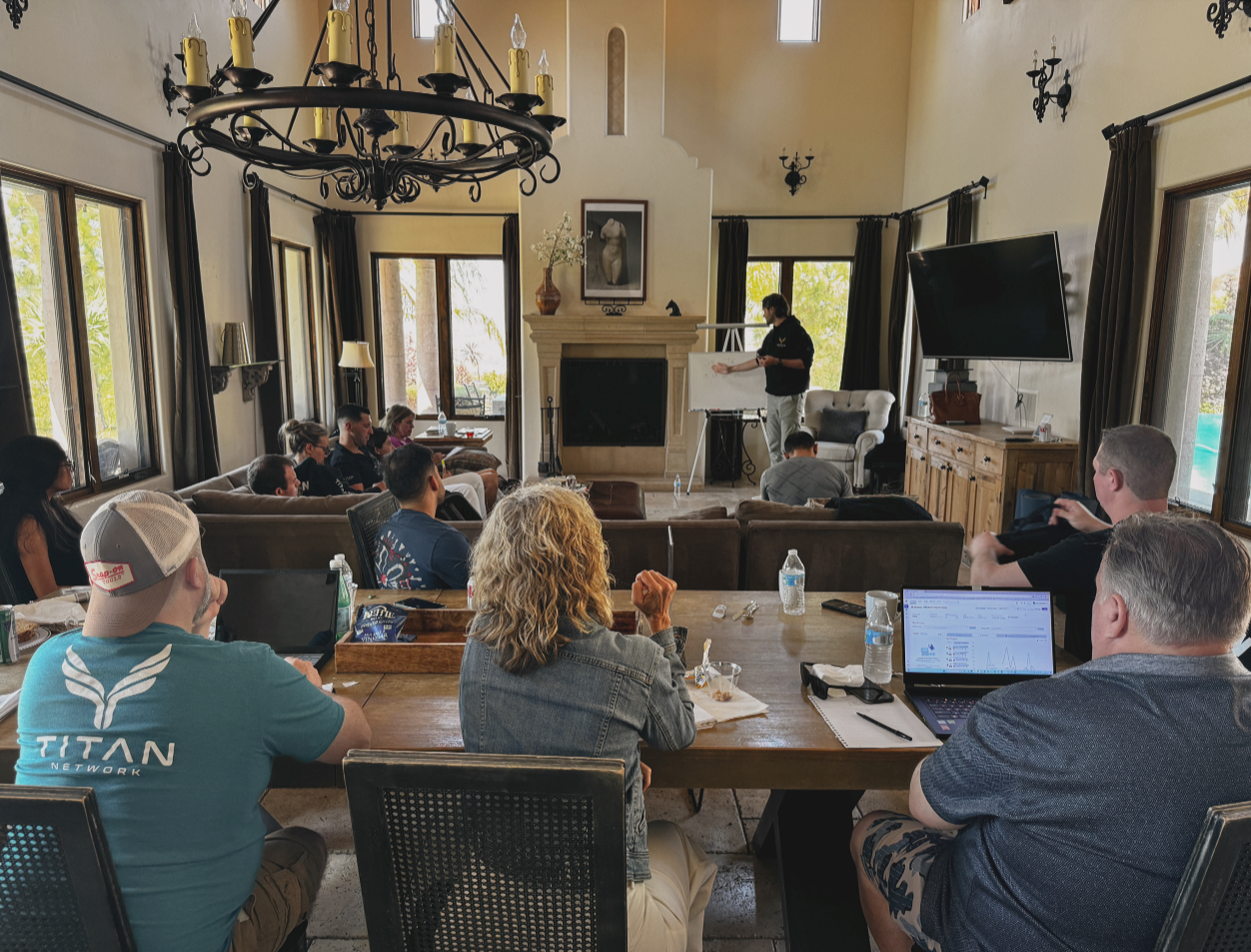
Titan Network members leverage battle-tested SOPs that transform delivery delays from profit killers into manageable operational challenges. Our community-developed escalation templates and automated monitoring systems have helped members reduce delay-related EBITDA erosion by an average of $23,000 annually while improving customer satisfaction scores by 15-20%.
During quarterly peer accountability sessions, members share real-time solutions for emerging delay patterns. One member’s automated buffer inventory system, refined through group feedback, prevented $180,000 in lost sales during last year’s holiday surge. This collaborative approach accelerates problem-solving beyond what individual sellers achieve working in isolation.
The combination of proven systems, expert mentorship, and peer accountability creates the operational resilience that 7-8 figure sellers need to scale profitably. When amazon delaying delivery threatens your margins, having immediate access to tested solutions and experienced guidance makes the difference between reactive damage control and proactive profit protection.
Ready to engineer delivery delays out of your operation? Join the community of sellers who’ve already solved this challenge and are scaling to their next revenue milestone with systematic precision.
For more on how e-commerce has changed in recent years, see this analysis from the U.S. Census Bureau.
Frequently Asked Questions
What are the main causes of Amazon delivery delays and how do they impact seller margins?
Amazon delivery delays primarily stem from warehouse throughput limits during demand spikes, third-party carrier SLA breaches, and inventory allocation prioritizing velocity over delivery commitments. These delays increase customer complaints and compensation costs, directly cutting into seller EBITDA and reducing quarterly margins by 15-20%.
How can sellers proactively manage and mitigate the financial effects of Amazon fulfillment disruptions?
Sellers can mitigate financial impact by implementing SOPs that monitor shipment status in real-time, escalating delays early, and adjusting inventory allocation to balance velocity with delivery promises. Automating customer communication and leveraging DSP retargeting to recover lost conversions also protect margin and reduce compensation payouts.
What strategies do top-performing Amazon sellers use to handle delivery delays during peak seasons?
Top sellers prepare for peak seasons by increasing safety stock in fulfillment centers, diversifying carrier options, and running advanced forecasting models to anticipate bottlenecks. They also deploy contingency SOPs for rapid escalation and customer communication, turning potential delays into trust-building opportunities that preserve EBITDA under pressure.
How do third-party carrier bottlenecks contribute to delivery delays and what are effective workarounds?
Third-party carrier bottlenecks cause SLA breaches due to capacity constraints and routing inefficiencies, leading to late deliveries and increased compensation costs. Effective workarounds include negotiating prioritized service agreements, shifting volume to alternative carriers, and integrating carrier performance data into supply chain dashboards for proactive rerouting and escalation.
Keep readingRead the Amazon operator playbook →