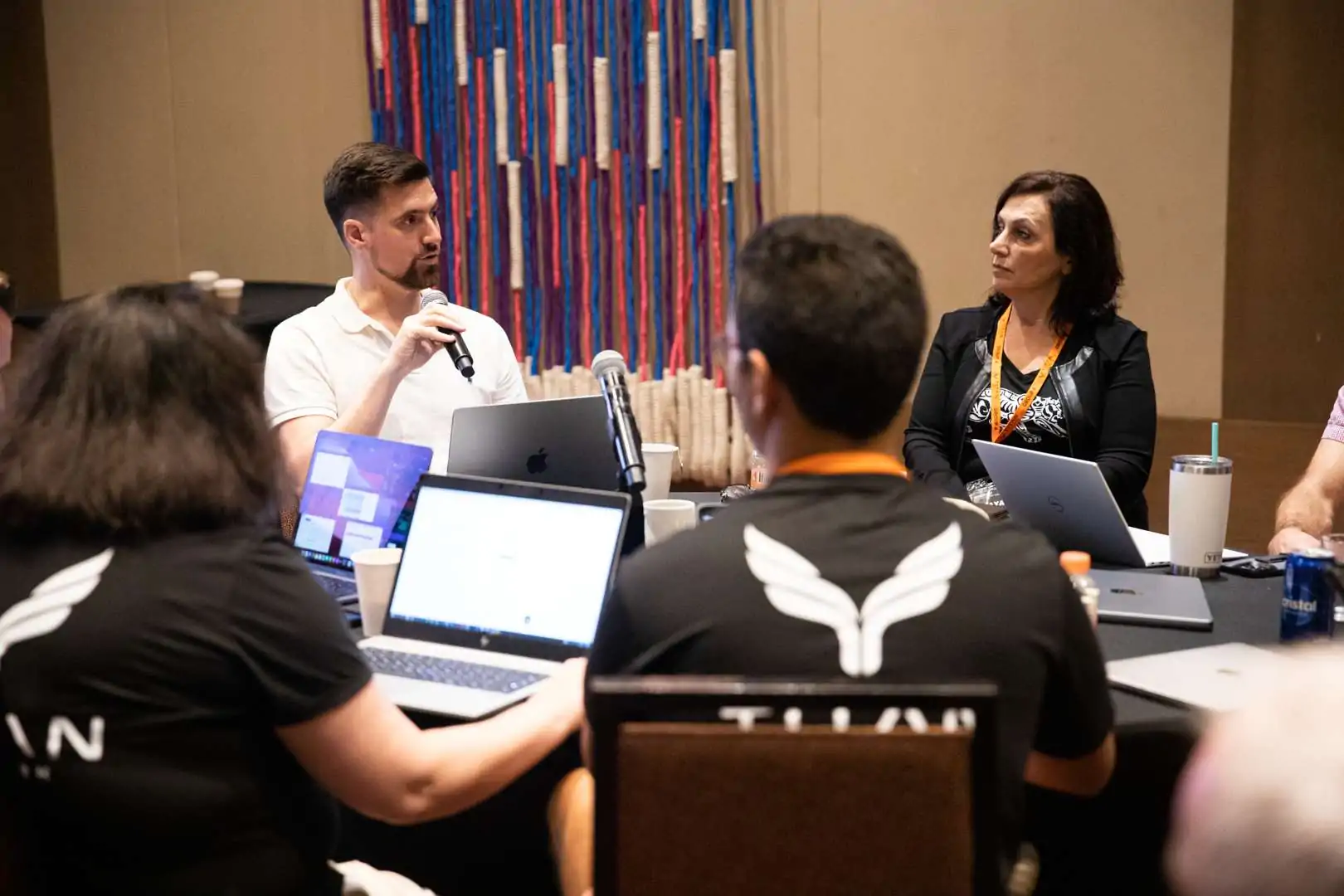
Best expert-led scaling alternatives.
Best Expert-Led Scaling Alternatives for Elite Amazon Sellers
Beyond the Burn Rate: Unpacking “Expert-Led Scaling” for Elite Amazon Sellers
Smart scaling prioritizes intelligent systems over brute-force spending. Instead of throwing capital at inventory expansion or PPC budgets, elite sellers focus on AI-driven automation, community expertise, and energy-efficient operations that maximize EBITDA without margin erosion.
What “Expert-Led Scaling” Really Means for Your $1M+ Business
Expert-led scaling means strategic growth guided by proven methods rather than trial-and-error capital deployment. You’re moving beyond the traditional “hire more VAs, buy more inventory” approach toward systems that compound efficiency.
The difference? Operational sophistication. Traditional scaling multiplies your current processes, which multiplies inefficiencies. Expert-led alternatives rebuild your foundation with predictive analytics, automated decision-making, and peer accountability systems.
The Hidden Costs of Traditional Scaling
Every additional SKU introduces inventory risk. Each new marketplace demands unique compliance protocols. More traffic without conversion optimization burns cash through inflated ACoS.
Consider attribution complexity: multi-touch customer journeys across Amazon DSP, Sponsored Ads, and external traffic create measurement blind spots. You might be optimizing campaigns without a clear view of true customer acquisition costs.
Shifting Gears: From Reactive Growth to Proactive Strategy
Proactive scaling starts with demand forecasting algorithms that prevent stockouts and overstock penalties. Machine learning models analyze seasonality patterns, competitor pricing, and supply chain disruptions before they impact your cash flow.
Smart scaling integrates community intelligence by giving you access to collective expertise from sellers who’ve navigated similar challenges. This moves you from isolated decision-making toward data-backed strategic planning with built-in accountability.
Async-Native Scaling: The Unseen Power for I/O-Heavy Amazon Operations
Understanding I/O Bottlenecks: The Silent Killer of Seller Efficiency
Your systems can choke on data requests. Every inventory sync, order processing batch, and performance report creates I/O bottlenecks that compound with scale. When your team waits 30 seconds for Seller Central to load product data, that delay drains profit.
More SKUs mean more API calls. Additional marketplaces multiply data synchronization points. Your infrastructure becomes the limiting factor that prevents breakthrough growth. Not your capital or market opportunity.
The Async Advantage: How Non-Blocking Operations Drive Scalability
Asynchronous operations reduce waiting by processing multiple tasks simultaneously. Instead of sequential inventory updates that lock your system for minutes, async workflows handle hundreds of SKU changes in parallel while your team stays focused on strategic work.
Practical Applications: Streamlining Inventory, Order Processing, and Data Analytics
Deploy async workflows for demand forecasting algorithms that analyze competitor pricing, seasonality patterns, and supply chain signals without interrupting daily operations. Your analytics run in the background and deliver actionable insights without system lag.
Order fulfillment automation processes customer communications, inventory adjustments, and shipping notifications simultaneously. This parallel processing approach supports intelligent scaling by increasing operational throughput while reducing resource use.
Case Study: Breaking Through I/O Barriers
A $5M seller reduced operational overhead by 40% after implementing async data processing for a 2,000-SKU catalog. Previously, the team spent 3 hours daily waiting for system responses. Async processing freed up 15 hours weekly, which created more time for profit optimization and strategic expansion without additional headcount.
The “Soft Power” of Scaling: AI, Automation, and Community as Your Expert Guides
AI-Driven Insights: Predictive Analytics for Inventory and Demand Forecasting
Machine learning models process historical sales data, seasonal fluctuations, and external market signals to predict demand with high accuracy. This intelligence helps prevent costly stockouts and reduces excess inventory carrying costs that erode EBITDA margins.
Predictive models also flag expansion opportunities by analyzing competitor gaps, keyword search volume trends, and customer behavior patterns. You can make data-backed decisions rather than relying on intuition that might drain cash flow through failed launches.
Intelligent Automation: Improving SOPs and Customer Service
Smart automation handles routine decisions while escalating complex issues to human oversight. Automated repricing rules update competitive positioning frequently based on market conditions, helping protect profit margins without constant manual intervention.
Customer service automation resolves most common inquiries quickly while building better customer notes for future targeting. Intelligent scaling pairs operational efficiency with clear human accountability.
Community as a Scaling Engine: Peer Accountability and Shared Expertise
High-performing seller communities offer shared pattern recognition that a single operator can’t match. When you face attribution challenges or supply chain disruptions, peer insight speeds up problem-solving and reduces trial-and-error costs.
Structured accountability helps sustain execution. Weekly performance reviews and peer feedback reduce strategic drift that often appears during rapid expansion.
Titan Network’s Approach: Structured Systems Meet Elite Collaboration
At Titan Network, our approach combines operational frameworks with high-level peer collaboration. Members get access to proven SOPs for inventory management, PPC optimization, and supply chain efficiency, along with mastermind sessions focused on growth initiatives.
Energy-Efficient Scaling: Maximizing Profit with a Smaller Footprint
The True Cost of Power: When Scaling Becomes an Electrical Drain
Operational infrastructure consumes more energy as you scale. Server costs, warehouse lighting, climate control, and computing resources add up. These expenses pressure margins and create overhead that slows long-term growth.
Energy efficiency can be a profit strategy. Lower power consumption improves EBITDA and supports expansion without matching cost increases.
Smart Infrastructure Choices: Moving Beyond Energy-Hungry Solutions
Cloud-based systems reduce physical server maintenance while offering elastic capacity. Automated warehouse management cuts lighting and climate-control costs through scheduling and zone-based environmental controls.
Energy-efficient computing reduces power usage compared with older setups. Smart scaling treats sustainability as part of cost control, not as a separate initiative.
Optimizing Your Operational Stack for Cost and Efficiency
Consolidate software into integrated platforms that reduce redundant processing and system overhead. Unified dashboards for inventory, analytics, and customer management streamline workflows and reduce energy use across multiple apps.
Pros
- Reduced operational overhead by 30%-40%
- Improved EBITDA through energy cost control
- Scalable infrastructure without proportional cost increases
- Improved system reliability and performance
Cons
- Initial setup requires technical expertise
- Migration may temporarily disrupt operations
- Staff training is needed for new systems
The “Power Is Basically Free” Mindset: Strategic Investments for Long-Term Gains
Invest in infrastructure that produces compounding efficiency gains. Solar power installations, energy-efficient computing hardware, and smart facility management create advantages that improve margins year over year.
When operating costs stay stable as revenue grows, you avoid the margin compression loop that traps many brands. Smart scaling treats energy efficiency as a measurable driver of profitability.
Frequently Asked Questions
What are the alternatives to traditional, brute-force scaling for Amazon sellers?
Elite Amazon sellers are moving beyond just throwing capital at inventory or PPC. The real alternatives focus on intelligent systems, like AI-driven automation and community expertise. This approach prioritizes maximizing EBITDA without margin erosion, rather than simply increasing costs.
What makes an expert-led scaling strategy 'smart' for Amazon sellers?
A smart, expert-led strategy means strategic growth guided by proven methods, not trial-and-error spending. It rebuilds your foundation with predictive analytics, automated decision-making, and peer accountability. This shifts you from multiplying inefficiencies to compounding efficiency and operational sophistication.
What approaches compete with expert-led scaling, and why are they less effective?
Traditional scaling, which often means just hiring more VAs or buying more inventory, is the main competitor. It multiplies your current processes, which unfortunately multiplies inefficiencies. This often leads to EBITDA margins compressing because you’re scaling costs, not intelligence.
How do elite Amazon sellers adopt expert-led scaling strategies?
It starts with shifting from reactive growth to proactive, expert-driven strategies. This includes using demand forecasting algorithms and machine learning models to analyze market patterns. Integrating community intelligence also provides collective expertise from sellers who have navigated similar challenges.
What is 'async-native scaling' and why is it important for Amazon operations?
Async-native scaling uses asynchronous operations to process multiple tasks simultaneously, reducing system waiting times. This is important because traditional scaling amplifies I/O bottlenecks, where systems choke on data requests. Implementing async workflows can drastically cut processing times, freeing up hours for strategic work.
How does community expertise fit into expert-led scaling?
High-performing seller communities offer shared pattern recognition that a single operator cannot match. This gives you access to collective expertise from sellers who have faced similar challenges. It moves isolated decision-making towards data-backed strategic planning with built-in accountability.
About the Author
Dan Ashburn is the Co-Founder at Titan Network. The world’s leading community for Amazon sellers scaling to 7 and 8 figures. A former top 1% Amazon FBA seller turned growth strategist, Dan has spent the last decade engineering data-driven campaigns that have generated hundreds of millions in marketplace sales and DTC revenue for Titan’s partners.
At Titan Network, Dan, alongside his cofounder Athena Severi and their team of top talent, architects full-funnel growth frameworks that help margin-squeezed, time-poor brands unlock quick wins, shore up profits, and expand beyond Amazon. Their playbooks fuse advanced PPC automation, creative conversion-rate optimization, and airtight supply-chain SOPs. Giving sellers the step-by-step systems, expert mentorship, and peer accountability they need to dominate crowded niches while safeguarding EBITDA.
A sought-after speaker at Prosper Show, SellerCon, and White Label Expo, Dan demystifies algorithm shifts and shares ROI-focused tactics. From DSP retargeting hacks to DTC attribution modeling. Empowering operators to make confident, cash-generating decisions. Titan Network has positioned itself as the world’s premier Amazon Seller Mastermind, providing high-quality tactical strategies and pinpointing growth levers that move the profit needle this quarter.