Key Takeaways
- Online arbitrage offers a powerful profit lever often overlooked by seven-figure sellers.
- Margin compression and operational challenges can be mitigated through effective online arbitrage strategies.
- Many sellers struggle with wholesale minimums and private label timelines, missing simpler profit opportunities.
- Unlocking EBITDA is achievable by leveraging online arbitrage alongside existing business models.
Table of Contents
- Unlocking EBITDA Through Online Arbitrage
- High-Performance Online Arbitrage: Principles & Models
- Platform Selection & Sourcing Workflow Optimization
- Advanced OA Tech Stack: Maximizing Margin With Precision
- Financial Modeling, Fee Engineering, and Margin Protection
- Scaling OA, Ops Efficiency, Team Delegation, and Cash Flow Mastery
- Next-Level Profit Levers, Creative Tactics and Real Seller Scenarios
- Community, Ongoing Growth & Titan Network Value
- Conclusion: Accelerate Profit, Defend Margin, Win Bigger
Unlocking EBITDA Through Online Arbitrage
Margin compression, operational drag, endless sourcing grind, sound familiar? While you’re wrestling with wholesale minimums and private label timelines, there’s a profit lever sitting right in front of you that most seven-figure sellers overlook.
Online arbitrage is smart, digital-first product sourcing: buy undervalued goods online, resell via Amazon FBA at profit. Unlike wholesale’s capital requirements or private label’s development cycles, online arbitrage delivers speed to inventory, location independence, and direct impact on cash flow. Best Amazon Seller Mastermind communities like Titan Network can help you accelerate these advantages.
You’re not chasing $20 flips here. At your scale, leverage online arbitrage to unearth scalable, high-velocity SKUs that move the needle on EBITDA. Recent marketplace data shows sellers implementing systematic online arbitrage strategies see 15-25% margin improvements within 90 days. For more in-depth strategies, explore this guide to Amazon arbitrage.
High-Performance Online Arbitrage: Principles & Models

Established sellers systematize online arbitrage around three core profit levers: market inefficiencies, pricing gaps, and time-value arbitrage. The key is treating this as portfolio expansion, not side hustle. If you want to connect with a network of high-level sellers, connect with Titan Network for peer support and mentorship.
| Principle | OA Application | EBITDA Impact |
|---|---|---|
| Velocity | Daily sales cycle | Faster cash returns |
| Margin | Pricing spreads | Direct profitability |
| Scalability | 100% remote ops | Lower fixed costs |
Target 15-25% net margin minimum, prioritizing SKUs with $5-$30 per unit margin. Run mock calculations on Sourcing-to-Sale Time, under 3 weeks is optimal for cash flow velocity. Unlike wholesale’s 90-day payment terms or private label’s 6-month development cycles, online arbitrage operates on Amazon’s standard 14-day payout schedule with minimal capital requirements and zero order quantity commitments.
Platform Selection & Sourcing Workflow Optimization
Sourcing Platforms: Ranking the Top Channels
Platform selection directly impacts margin and operational efficiency. Focus on channels with consistent inventory depth and reliable fulfillment.
| Platform | Avg Margin | SKU Velocity | Processing Time | Key Risks |
|---|---|---|---|---|
| Walmart.com | 12-18% | 7+/month | 1-4 days | Order cancellation |
| eBay | 15-25% | 6+/month | 2-5 days | Counterfeit risk |
| Smaller retailers | 18%+ | Varies | 2-7 days | Sourcing limits |
Sourcing SOPs: Tactical Process Mapping
Perform daily online arbitrage scans, filtering by ROI >30% and BSR <100K. Bulk buy high-velocity SKUs when patterns emerge. Apply cashback and coupons systematically, track percentage cash flow improvement weekly. Sourcing speed equals competitive advantage in this space. For more sourcing workflow tips, read this in-depth blog post.
Validate “new” versus “used” SKU condition with photo documentation for each batch. Spot-check IP and brand gating before purchase. Retain supplier records for 180 days to maintain audit trail and prevent Amazon suspensions from online arbitrage sourcing.
Advanced OA Tech Stack: Maximizing Margin With Precision
Software Deep-Dive: Tactical Arbitrage, Reprice Tools, BSR Analytics
The right tech stack transforms online arbitrage from manual hunting to systematic profit generation. Focus on tools that deliver measurable time savings and margin impact.
| Tool | Core Function | Margin Impact | Time Savings |
|---|---|---|---|
| Tactical Arbitrage | 1,400+ store scan | Source higher ROI SKUs | 10+ hrs/wk |
| Aura/SellerApp | Dynamic repricing | Defend/expand margins | 2+ hrs/wk |
| Keepa | Market tracking | Accurate BSR, price trend | 1+ hr/wk |
Set up automated scans on target categories 3+ times weekly. Filter results for high-conversion eligibility, Prime eligibility and Buy Box percentage matter. Layer coupon and cashback plugins for net margin boost. Sellers implementing full automation see 20%+ increases in sourcing speed.
SOPs for Integrating Tools
Establish API setup between sourcing tools and inventory management systems. Configure spreadsheet sync for real-time profit calculations. Set auto-alerts on price drops for repeat purchases. Create error-proofing protocols to avoid mismatches and false positives, validate every automated recommendation against current Amazon listing data before purchase.
Financial Modeling, Fee Engineering, and Margin Protection

Fee Analysis and Size Tier Manipulation
Amazon FBA fees vary dramatically across size tiers. Standard-size items under 12 oz cost $3.22 in fulfillment fees, while oversized items start at $9.73. Use Amazon’s calculator to model every SKU’s total COGS plus FBA fees before purchase. Repackaging or bundling can drop unit fees by up to 18% when moving items between size categories.
ROI Forecasting and SKU Filtering
Apply this formula consistently: ROI = [(Sale Price – (COGS + Shipping + FBA Fee))/COGS] × 100. Implement batch SKU filtering accepting only deals with >30% expected ROI. Layer in seasonal storage and refund forecasts through quarterly reviews. Use rolling 90-day sales velocity data and pull historical BSR fluctuations to minimize dead stock risks. For more on financial modeling, see this blog article.
Promo Testing and Dynamic Pricing
Run regular A/B tests on pricing, coupons, and bundles. Measure conversion lift versus margin impact weekly. Set up dynamic repricer with margin guardrails, never drop below 15% net margin regardless of competition. Sellers testing promos on high-margin online arbitrage SKUs see average 25-30% order lift.
Scaling OA, Ops Efficiency, Team Delegation, and Cash Flow Mastery
Prep Centers, Virtual Assistants, and Systemized Outbound Logistics
| Task | Outsourcer/Tool | Time Saved (wk) | EBITDA Impact |
|---|---|---|---|
| Prep/Inspection | Prep center | 5+ hrs | Lower error/faster listing |
| OA deal review | Virtual assistant | 3+ hrs | Increased sourcing bandwidth |
| Shipping | 3PL integration | 2+ hrs | Reduced lost sales |
Onboard support with clear SOPs and audit protocols. Titan Network provides proven checklists for VA training and prep center evaluation that eliminate common scaling bottlenecks. For hands-on learning, consider attending Titan Network Workshops to streamline your operations.
Portfolio Management and Inventory Sync
Integrate online arbitrage with existing wholesale and private label operations through multi-channel SKU tracking. Monitor units sourced, percentage of online arbitrage in total mix, and velocity per channel. Weekly review cadence for profitable SKU stack prevents portfolio drift. One Titan member tripled online arbitrage profit after shifting to bundled operations management.
When price wars, listing restrictions, or supplier issues hit, follow this tactical response: reprice within margin guardrails first, re-source from alternative channels second, escalate through peer network for creative solutions third. The Titan community provides real-time troubleshooting for high-level online arbitrage challenges.
Next-Level Profit Levers, Creative Tactics and Real Seller Scenarios
Cashback, Rebates, and Credit Card Optimization
Stack cashback programs and rotate credit card cycles for maximum 2-7% margin boost. Use SaaS platforms that auto-pull eligible deals from loyalty programs. Current Titan sellers report monthly cash flow uplifts of $2,000-$8,000 through systematic cashback optimization on their online arbitrage purchases.
Case Studies: Real-World OA Wins
A Titan member sourced electronics from Walmart.com clearance, generating $1,850 profit in one shipment. The breakdown: 24 units at $47 COGS, sold at $127 average, minus $8.50 FBA fees per unit. Total margin: 56%. The key was identifying seasonal inventory liquidation patterns and moving fast on high-BSR electronics. For a broader perspective on arbitrage, see the Wikipedia entry on arbitrage.
| Metric | Before Titan Systems | After Implementation |
|---|---|---|
| Monthly OA Revenue | $12,000 | $34,000 |
| Time Investment | 25 hrs/week | 8 hrs/week |
| Net Margin | 18% | 31% |
High-Margin Categories for Elite Sellers
Home & Kitchen maintains 22-35% margins with consistent velocity. Beauty products offer 28-45% margins but require careful expiration date management. Toys surge seasonally with 30-60% margins during Q4. Electronics clearance provides 25-40% margins with rapid turnover. Focus on categories where your existing expertise creates competitive advantage in product evaluation and market timing.
Risk Management: Counterfeit, Returns, and Compliance
Document every purchase with supplier screenshots and receipts. Maintain 180-day audit trails for account health protection. When suspect shipments arrive, photograph everything before sending to Amazon. For disputes, escalate through Seller Support with complete documentation chain. Online arbitrage remains highly sustainable as competition increases, winners differentiate through superior systems, not just deal-finding speed. For more on compliance, review the FTC’s guidance on compliance.
Community, Ongoing Growth & Titan Network Value
Networking, Peer Accountability, and Systems Mentorship
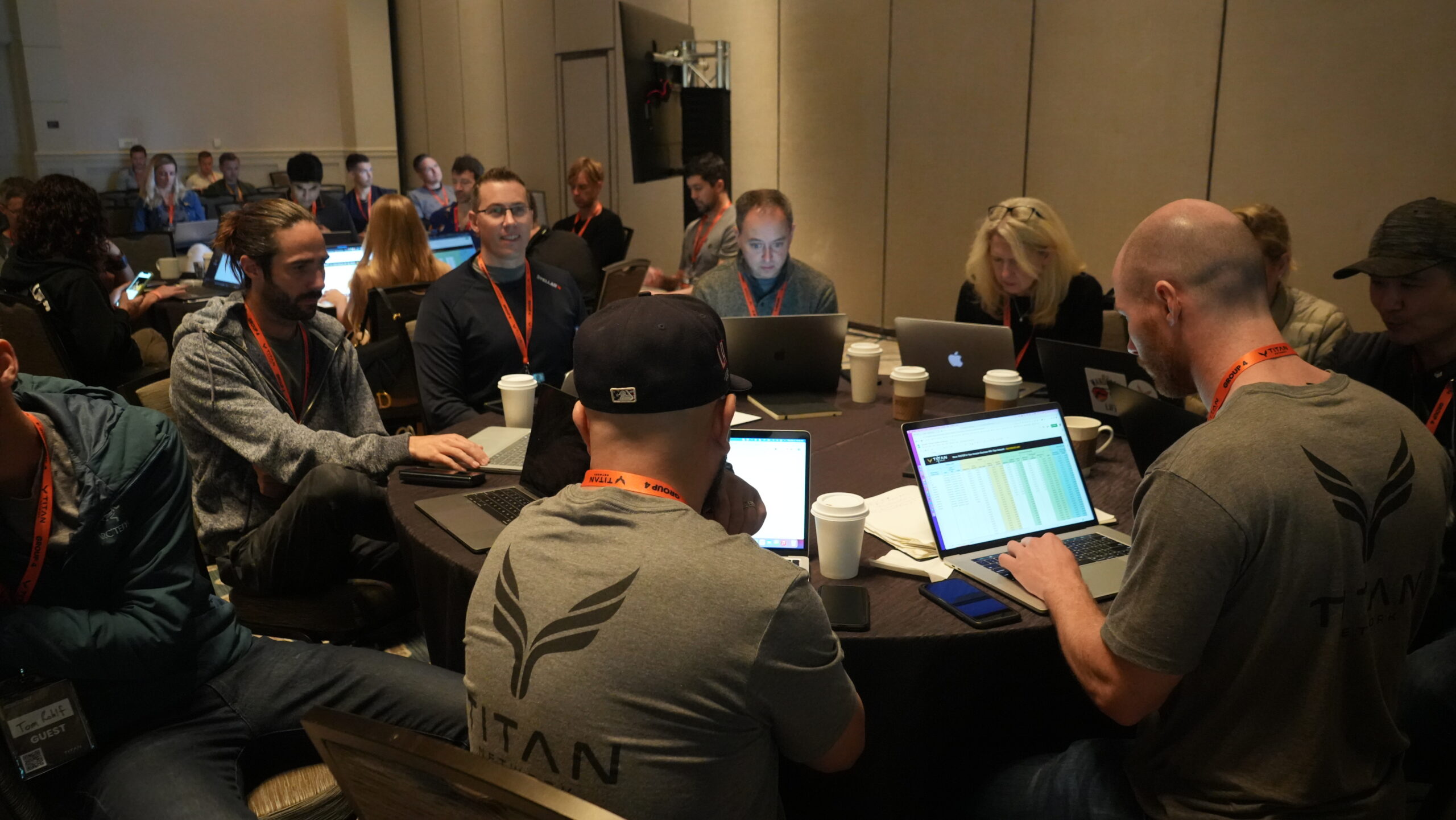
Professional Amazon sellers gain systematic deal vetting, trusted supplier connections, and access to live tactics through Titan Network’s proven framework. One member broke through a $2M revenue plateau by implementing peer accountability protocols and advanced online arbitrage automation systems developed within the community. For upcoming opportunities, check out Titan Network Events.
The difference between solo grinding and systematic scaling lies in mentorship quality and peer network depth. Titan provides both through structured accountability and real-time market intelligence sharing.
Resource Bank & Next Steps
Essential reading includes “Online Arbitrage” by Chris Green for foundational concepts. Advanced SaaS tools require ongoing education, markets evolve, winners adapt through continuous learning. Titan’s exclusive live events provide cutting-edge tactics before they become mainstream knowledge.
Success in online arbitrage demands systematic iteration. What works today requires refinement tomorrow. The most profitable sellers build with community, not in isolation.
Conclusion: Accelerate Profit, Defend Margin, Win Bigger
Online arbitrage success for elite Amazon sellers hinges on systematic, data-driven sourcing combined with ruthless fee control. Start with proven categories, scale through automation, and systemize every process for delegation. The single most important profit lever remains consistent: systematic sourcing with uncompromising margin discipline.
The Titan Advantage: Don’t build online arbitrage systems alone. Leverage proven frameworks, peer accountability, and real-time market intelligence to accelerate your path from six to eight figures. Future-proof your cash flow through relentless optimization and community-driven growth.
Your next shipment should implement at least three tactics from this guide. Your next quarter should show measurable EBITDA improvement through online arbitrage integration. Your next year should demonstrate the compounding power of systematic sourcing excellence.
Frequently Asked Questions
How can online arbitrage help mitigate margin compression and operational challenges for Amazon sellers?
Online arbitrage provides a flexible sourcing channel that bypasses wholesale minimums and lengthy private label timelines, enabling faster inventory turnover and improved cash flow. By targeting undervalued products online and leveraging efficient workflows, sellers can protect margins and reduce operational drag, directly boosting EBITDA.
What are the key principles and models that define high-performance online arbitrage?
High-performance online arbitrage centers on three profit levers: velocity (fast sales cycles for rapid cash returns), margin (exploiting pricing spreads for direct profitability), and scalability (remote operations with low fixed costs). Treating OA as a strategic portfolio expansion, not a side hustle, ensures sustainable EBITDA growth.
Which sourcing platforms offer the best balance of margin, SKU velocity, and processing time for online arbitrage?
Top-tier OA sellers prioritize platforms with deep discount pools, reliable inventory data, and streamlined checkout processes to maximize margin and SKU velocity. Marketplaces with integrated repricing tools and API access enable faster sourcing decisions and reduce processing time, critical for maintaining high turnover and operational efficiency.
How does leveraging advanced technology and fee engineering improve profitability in online arbitrage?
Advanced tech stacks automate sourcing, repricing, and inventory management, minimizing manual errors and time spent on low-ROI tasks. Coupled with fee engineering, optimizing FBA fees, bundling strategies, and category-specific cost controls, this approach safeguards margins and elevates EBITDA by turning operational precision into profit.