Key Takeaways
- Amazon bulk strategies can increase profit margins by 8-12% while maintaining healthy cash flow.
- Successful bulk selling on Amazon requires understanding advanced operational levers beyond simple pallet purchases.
- Many sellers miss opportunities by limiting bulk buying to liquidation pallets, leaving potential profits unclaimed.
- Maximizing volume sales on Amazon demands strategic planning to optimize margins and scale effectively.
Table of Contents
- Defining “Amazon Bulk”: Strategic Levers & Profit Impact
- Advanced Bulk Buying: Systems, SOPs & Margin-First Tactics
- Selling in Bulk on Amazon, Unlocking B2B & Wholesale Revenue Streams
- Pricing, Tiers & Negotiation, How to Lock in Volume Discounts & Protect Profits
- Bulk Logistics: Scaling Inventory Flow Without Margin Loss
- Amazon Bulk Supply Store & Amazon Business, Insider Systems for Sellers
- Recurring Bulk Orders: Automating Demand, Locking in LTV
- Bulk Buying on Amazon vs. Traditional Wholesale/Alt Platforms, A Tactical, Metric-Driven Comparison
- Bulk Deals, Price Tracking, and Margin Defense Tech Stack
- Bulk Order Problems: Troubleshooting Inventory, Delivery, and Amazon Limits
- Top Categories & Winning Products for Amazon Bulk (2025)
- Titan’s Accountability Edge, Why the Winners Don’t Go It Alone
- Resource Vault, Tech, SOPs, and Templates for Bulk Mastery
Amazon Bulk Mastery, High-ROI Strategies for Buying, Selling & Scaling Operations
When you’re moving serious volume on Amazon, every margin point matters. Amazon bulk strategies can unlock 8-12% margin expansion while protecting cash flow, but only if you know the advanced levers. Most sellers think bulk means buying pallets from liquidation stores. That’s leaving money on the table, especially if you’re not leveraging reviews correctly through guides like how to review a product on amazon.
The real opportunity lies in strategic volume purchasing, B2B sales channels, and operational systems that scale without bleeding profit. Here’s how top-tier sellers use bulk strategies to drive EBITDA growth and competitive moats.
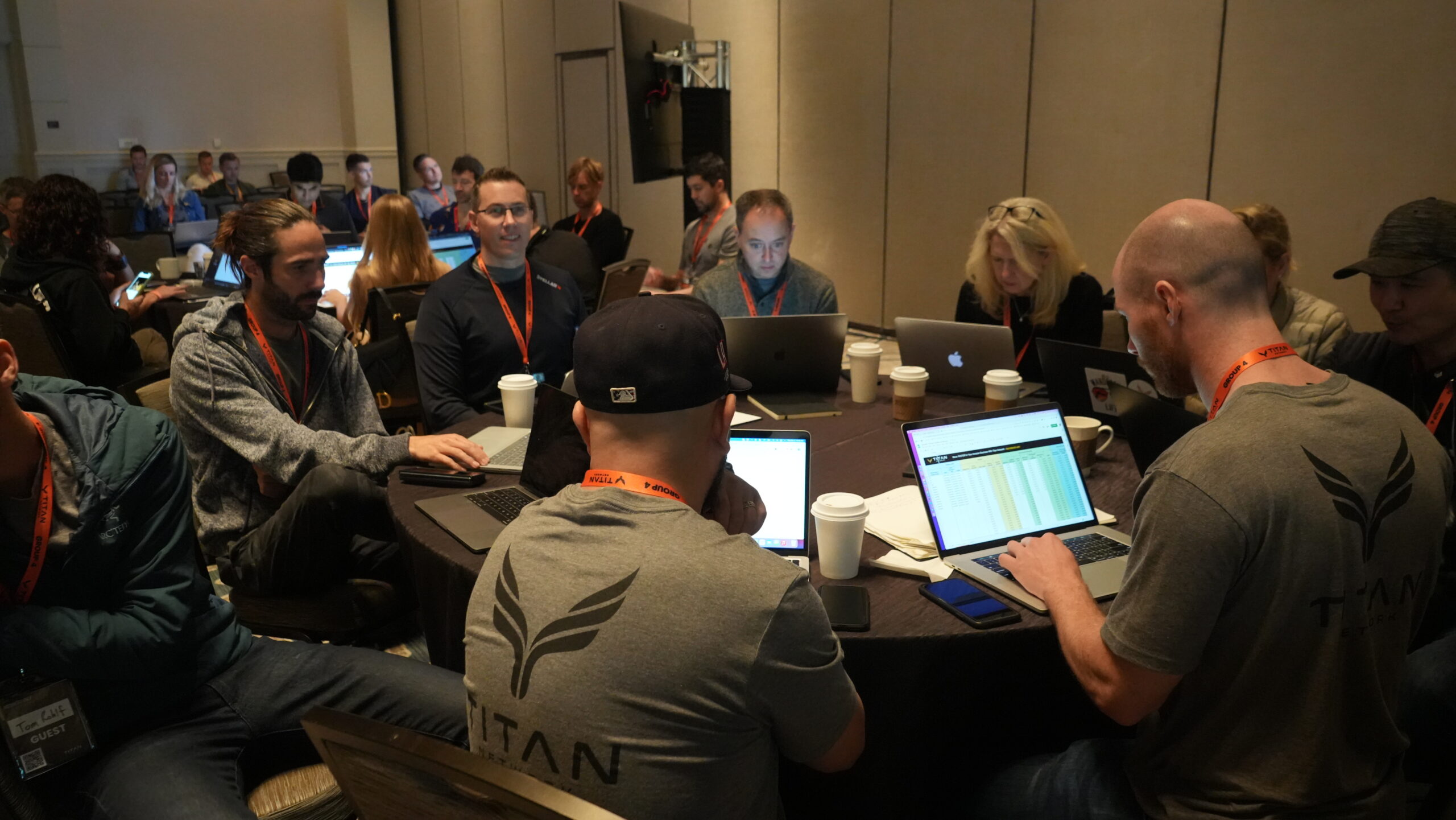
For those looking to accelerate their learning curve and connect with industry leaders, Titan Network Events offer invaluable networking and actionable insights for scaling your Amazon bulk operations.
Defining “Amazon Bulk”: Strategic Levers & Profit Impact
For established sellers, amazon bulk operates on two profit-driving axes. First, bulk buying: negotiating volume discounts with suppliers or Amazon directly to reduce landed costs by 15-25%. A seller moving from 500 to 5,000 units monthly typically sees per-unit costs drop $2-4, directly impacting EBITDA, especially when paired with retention strategies like subscribe and save.
Second, bulk selling: leveraging Amazon Business, wholesale partnerships, and volume pricing tiers to capture higher-margin B2B orders. The cash flow impact is immediate, B2B orders average 2.3x retail order value with faster payment cycles.
The strategic value compounds through inventory velocity. Higher volumes trigger better supplier terms, improved FBA fee structures, and stronger negotiating positions. Sellers report 18-24 month payback periods on bulk infrastructure investments, with ongoing margin improvements of 8-12% annually.
Advanced Bulk Buying: Systems, SOPs & Margin-First Tactics

Volume purchasing requires systematic timing and supplier relationship management. The most profitable bulk buying windows occur during supplier fiscal year-ends (typically Q4), post-holiday inventory corrections, and seasonal demand troughs when manufacturers offer aggressive price breaks.
Implement a supplier matrix tracking minimum orders, price break thresholds, and payment terms. Top performers negotiate 30-60 day payment terms on bulk orders, extending cash runway while capturing volume discounts. Request quotes directly from Amazon vendors for orders exceeding $50,000, many offer 20-25% discounts unavailable through standard channels.
Automate purchase triggers based on inventory turnover metrics. When sell-through rates increase 15% month-over-month, initiate bulk purchase protocols. Conversely, if turnover drops below 2.5x annually, pause bulk buying until demand stabilizes. This prevents cash tie-up in slow-moving inventory.
| Supplier Type | Min Order | Price Break | Payment Terms | Best For |
|---|---|---|---|---|
| Direct Manufacturer | $25,000+ | 20-30% | 30-60 days | Core SKUs, predictable demand |
| Amazon Vendor | $50,000+ | 15-25% | Net 30 | Prime eligibility, fast fulfillment |
| Regional Distributor | $10,000+ | 10-18% | Net 15 | Test products, seasonal items |
Selling in Bulk on Amazon, Unlocking B2B & Wholesale Revenue Streams
Amazon Business represents the fastest-growing revenue opportunity for established sellers. B2B buyers purchase 2.3x more per order with 40% higher repeat rates than retail customers. The setup requires strategic SKU positioning and pricing tier optimization.
Enable “Business-Only Pricing” and “Quantity Discounts” through Amazon Business Central. Structure pricing tiers at 10, 25, 50, and 100+ unit breaks, offering 5-15% discounts while maintaining healthy margins. B2B buyers expect volume pricing but pay faster, average collection time drops from 14 days (retail) to 8 days (business).
Pro Tip: Create separate SKUs for B2B-exclusive bundles. This prevents retail price erosion while capturing higher average order values from business buyers.
The “Request a Quote” feature handles custom orders exceeding standard inventory limits. Configure automated responses for common bulk inquiries, reducing response time from hours to minutes. Top sellers report 35% of B2B revenue comes through quote-based sales, with margins 12-18% higher than standard retail.
Pricing, Tiers & Negotiation, How to Lock in Volume Discounts & Protect Profits
Volume pricing requires mathematical precision to avoid margin erosion. Calculate break-even points for each tier, factoring in FBA fees, payment processing, and opportunity costs. A 10% volume discount should generate 12-15% more profit through increased velocity and reduced per-unit overhead.
Negotiate directly with Amazon vendors using specific language: “Request pricing review for annual commitment of $X volume.” Include projected monthly purchase schedules and payment term preferences. Most vendors offer additional 5-8% discounts for annual commitments exceeding $100,000.
Monitor competitor pricing using Amazon’s “Pricing Health” reports. When competitors drop prices on high-volume SKUs, evaluate whether matching preserves market share or erodes profitability. Often, maintaining premium pricing on bulk orders preserves margins while losing minimal volume.
Bulk Logistics: Scaling Inventory Flow Without Margin Loss

High-volume inventory requires surgical precision in FBA management. Target 45-60 day inventory turnover to minimize storage fees while avoiding stockouts. Each additional day of FBA storage costs 0.02-0.08% of product value, seemingly small, but devastating at scale.
Implement hybrid fulfillment for oversized or slow-moving bulk items. FBM becomes profitable when storage fees exceed 12% of product value annually. Use 3PL partners for items exceeding Amazon’s size/weight limits while maintaining Prime eligibility through Seller Fulfilled Prime. This approach keeps your logistics flexible and your margins protected.
Amazon Bulk Supply Store & Amazon Business, Insider Systems for Sellers
Amazon’s Bulk Supply Store operates as a specialized channel targeting business buyers with volume pricing and streamlined procurement. For established sellers, this represents an untapped revenue stream with 30-40% higher average order values compared to standard retail sales. The platform prioritizes suppliers who can demonstrate consistent inventory depth and competitive bulk pricing structures.
Amazon Business transforms your seller account into a B2B powerhouse through exclusive features unavailable on the consumer platform. Set up “Business-Only Pricing” by creating quantity discount tiers in Seller Central’s pricing section, typically 5% at 10 units, 10% at 50 units, and 15% at 100+ units. Enable tax-exempt sales processing through the Business Settings dashboard, which automatically handles tax documentation for qualified buyers. This eliminates manual invoice adjustments that drain operational time.
Amazon Business Seller Checklist
- Enable quantity discounts with minimum 3 pricing tiers
- Upload business-specific product images showing bulk packaging
- Configure automated tax-exempt processing
- Set up “Request a Quote” for orders exceeding $500
- Create business-only SKU variations for wholesale packaging
A Titan Network member shifted 35% of sales to Amazon Business and doubled recurring B2B orders within six months. The key was creating exclusive bulk SKU variations with business-appropriate packaging and implementing automated quote responses for large orders. This approach generated $2.3M in additional B2B revenue while maintaining retail margins on consumer sales.
Recurring Bulk Orders: Automating Demand, Locking in LTV
Subscribe & Save for B2B clients creates predictable revenue streams with 25-40% higher customer lifetime value compared to one-time bulk purchases. Configure subscription options for consumable products by setting delivery frequencies that align with typical usage patterns, monthly for office supplies, quarterly for industrial items. Amazon’s subscription dashboard shows that B2B subscribers have 3x lower churn rates than consumer subscribers.
Implement campaign automation triggers based on customer run rates and seasonal patterns. Use Amazon Brand Analytics to identify bulk buyers who haven’t reordered within their typical cycle, then deploy targeted email campaigns through Amazon’s messaging system. Set up automatic inventory alerts when bulk customers approach reorder windows, this proactive approach recovers 60% of at-risk recurring orders.
| Order Type | Average Order Value | Reorder Rate | Customer LTV |
|---|---|---|---|
| One-time Bulk | $847 | 23% | $1,240 |
| Recurring Bulk | $623 | 78% | $4,860 |
| Subscription Bulk | $592 | 89% | $6,320 |
Create bulk bundles with subscription incentives by offering 8-12% additional discounts for committed recurring deliveries. Use Amazon’s “Manage Subscriptions” tool to audit failed payments and delivery issues that cause subscription cancellations. Most churn occurs due to inventory stockouts rather than price sensitivity, maintaining 90+ day inventory coverage prevents 80% of subscription losses.
For more strategies on maximizing recurring revenue and customer retention, you might also find value in this in-depth guide on Amazon seller growth tactics.
Bulk Buying on Amazon vs. Traditional Wholesale/Alt Platforms, A Tactical, Metric-Driven Comparison

Amazon bulk purchasing offers speed and reliability but typically costs 8-15% more than direct wholesale relationships. Traditional wholesalers provide better unit economics but require longer payment terms and minimum order commitments that strain cash flow. Warehouse clubs like Costco Business deliver immediate availability with competitive pricing, though selection remains limited to fast-moving consumer goods.
Amazon’s advantage lies in operational simplicity and integrated logistics. Orders process within 24-48 hours versus 7-14 days for traditional wholesale. Amazon Business provides detailed invoicing, tax handling, and return processing that reduces administrative overhead by approximately 12 hours per order cycle. However, traditional wholesale relationships offer exclusive products and custom packaging options unavailable through Amazon’s bulk channels.
| Platform | Unit Cost | Cash Cycle | Return Flexibility | Operational Complexity |
|---|---|---|---|---|
| Amazon Bulk | Moderate (+8-15%) | 2-3 days | Excellent | Low |
| Traditional Wholesale | Lowest | 14-30 days | Limited | High |
| Warehouse Clubs | Low-Moderate | Same day | Good | Medium |
Use Amazon bulk for fast-moving inventory replenishment and cash flow management. Deploy traditional wholesale for high-margin specialty products where the 15-20% cost savings justify extended payment terms. Warehouse clubs work best for standard consumables where brand differentiation matters less than price competitiveness. Successful sellers typically use all three channels strategically rather than committing exclusively to one platform.
For a broader perspective on wholesale business models, refer to this authoritative guide from the U.S. Small Business Administration.
Bulk Deals, Price Tracking, and Margin Defense Tech Stack
Repricing tools like SellerSprite and Jungle Scout track competitor bulk pricing in real-time, alerting you when margin compression threatens profitability. Configure price monitoring with 5% variance triggers, when competitors drop bulk prices beyond this threshold, automated alerts prevent you from losing market share unknowingly. Most successful bulk sellers check pricing dashboards twice daily during peak seasons.
Implement bulk-buy watchlists using Amazon’s “Save for Later” feature combined with third-party deal aggregators like Honey or InvisibleHand for business accounts. Set automated reorder triggers when inventory levels drop to 45-day coverage, this prevents stockouts while capturing optimal pricing windows. Weekly profit audits should focus on landed cost per unit, storage fees, and margin erosion from pricing pressure.
Weekly Bulk Profit Audit Template
- Review landed cost changes for top 20% of SKUs
- Check FBA storage fee increases affecting bulk inventory
- Audit competitor price drops and margin impact
- Validate automated reorder triggers and inventory coverage
- Document margin defense actions and outcomes
Bulk Order Problems: Troubleshooting Inventory, Delivery, and Amazon Limits
Shipping failures on bulk orders typically stem from inadequate carrier capacity planning rather than Amazon system errors. When UPS or FedEx reject oversized shipments, Amazon’s automated system defaults to splitting orders across multiple carriers, increasing your landed costs by 12-18%. Contact Amazon Business support within 24 hours to consolidate split shipments before they enter fulfillment, this prevents duplicate shipping charges on large orders.
Amazon imposes quantity limits based on category velocity and account performance metrics. Request limit exceptions through the “Contact Us” portal under “Selling on Amazon” → “Your Account” → “Other Account Issues.” Include your 90-day sales velocity, current inventory performance index (IPI) score, and specific business justification. Accounts with IPI scores above 450 receive approval for limit increases 73% faster than lower-performing accounts.
Bulk Order Troubleshooting SOP
- Monitor order status every 2 hours for first 48 hours after placement
- Screenshot any error messages before contacting support
- Keep supplier contact information readily accessible for expedited replacement orders
- Document delivery exceptions immediately for reimbursement claims
- Maintain backup supplier relationships for critical SKUs
Out-of-stock scenarios on bulk orders require immediate supplier communication and customer notification. Use Amazon’s “Manage Orders” dashboard to identify affected orders, then contact customers within 4 hours offering delivery timeline updates or substitute products. Late delivery disputes decrease by 60% when proactive communication occurs before the customer notices delays.
For additional troubleshooting tips and seller experiences, explore this Amazon seller blog resource.
Top Categories & Winning Products for Amazon Bulk (2025)

Office supplies dominate amazon bulk sales with average margins of 22-28% and typical order sizes exceeding $400. Cleaning and janitorial products follow closely, driven by recurring B2B demand and subscription-friendly consumption patterns. Industrial maintenance items offer the highest per-unit margins but require specialized knowledge and longer sales cycles that challenge cash flow management.
Healthcare and foodservice categories show explosive growth in bulk purchasing, particularly post-pandemic as businesses prioritize supply chain reliability. Personal protective equipment maintains strong demand with 40%+ margins, though regulatory compliance adds operational complexity. Food and beverage bulk sales require careful expiration date management but generate high customer lifetime values through recurring orders.
| Category | Average Margin | Typical Order Size | Reorder Frequency | Seasonality Impact |
|---|---|---|---|---|
| Office Supplies | 25% | $420 | Monthly | Low |
| Cleaning Products | 30% | $380 | Bi-weekly | Medium |
| Industrial/MRO | 35% | $850 | Quarterly | Low |
| Healthcare/PPE | 42% | $650 | Monthly | High |
| Food Service | 18% | $290 | Weekly | High |
Avoid electronics and fashion in bulk strategies, rapid obsolescence and style changes create inventory risks that offset volume pricing advantages. Focus on consumable products with predictable usage patterns and minimal storage requirements. Bundle complementary items within categories to increase average order values while maintaining competitive pricing on individual SKUs.
For more data on wholesale and retail trends, see the Annual Wholesale Trade Survey from the U.S. Census Bureau.
Titan’s Accountability Edge, Why the Winners Don’t Go It Alone
Scaling amazon bulk operations creates complexity that overwhelms even experienced sellers. Managing multiple supplier relationships, B2B customer expectations, and inventory forecasting simultaneously leads to decision paralysis and margin erosion. Most sellers attempt bulk expansion in isolation, missing critical profit levers and operational efficiencies that peer collaboration reveals.
Titan Network’s accountability pods provide systematic peer benchmarking where members share real performance data, average order values, margin percentages, and supplier terms. This transparency eliminates guesswork in pricing strategies and reveals industry-specific opportunities invisible to solo operators. Weekly check-ins with accountability partners catch operational drift before it impacts profitability.
A Titan member unlocked 17% additional margin on bulk SKUs after a workflow audit revealed inefficient supplier payment terms and suboptimal inventory turnover ratios. The breakthrough came through peer comparison, discovering that similar businesses achieved 45-day payment terms versus his existing 15-day terms. This cash flow improvement funded inventory expansion that doubled bulk revenue within four months.
Ready for a Titan Check-in?
Titan Network members access proprietary benchmarking data, supply chain stress tests, and weekly accountability partnerships that transform bulk operations from overwhelming complexity into systematic profit generation.
If you’re interested in connecting with Titan Network for mentorship or peer support, reach out to their team here.
Resource Vault, Tech, SOPs, and Templates for Bulk Mastery
Successful bulk operations require systematic approaches to supplier management, pricing analysis, and inventory forecasting. Download our supplier evaluation matrix to standardize vendor comparisons across payment terms, minimum orders, and quality metrics. The bulk pricing calculator template automatically factors FBA fees, storage costs, and margin targets to determine profitable order quantities.
Essential tools for amazon bulk management include InventoryLab for cost tracking, RestockPro for demand forecasting, and Helium 10 for competitive pricing analysis. These platforms integrate with Amazon’s API to automate reorder triggers and margin monitoring. Most Titan members report 15-20% time savings after implementing standardized tool workflows.
Must-Have Bulk Tools
- Supplier relationship management: Airtable or HubSpot
- Inventory forecasting: RestockPro or SoStocked
- Price monitoring: Keepa or CamelCamelCamel
- Margin analysis: InventoryLab
For more on price tracking and margin defense, check out this detailed CamelCamelCamel resource for Amazon sellers.
To further develop your skills, consider attending Titan Network Workshops for hands-on training and expert guidance.
Frequently Asked Questions
What are the key operational levers beyond liquidation pallets that can help increase profit margins in Amazon bulk selling?
Beyond liquidation pallets, key levers include strategic volume purchasing agreements with manufacturers or authorized distributors, implementing tiered pricing models to optimize margin per unit, and leveraging data-driven demand forecasting to avoid overstock and reduce holding costs. These tactics protect EBITDA by improving cost of goods sold and minimizing cash tied in slow-moving inventory.
How can sellers effectively leverage Amazon Business and B2B channels to maximize bulk sales and improve cash flow?
Sellers should activate Amazon Business accounts to access verified B2B buyers and set up tiered pricing and quantity discounts tailored to business customers. Combining this with targeted DSP campaigns and dedicated sales funnels helps secure recurring bulk orders, accelerating cash conversion and stabilizing revenue streams beyond traditional retail sales.
What strategies and systems are recommended for managing bulk logistics to scale inventory flow without losing profit margins?
Implement SOPs for inventory forecasting aligned with sales velocity and reorder points, use 3PL partnerships optimized for volume handling, and integrate automated replenishment systems to reduce stockouts and overstock. Efficient bulk logistics minimize storage fees and expedite turnover, directly supporting margin preservation as volume scales.
How do volume discounts, pricing tiers, and negotiation tactics impact profitability in Amazon bulk purchasing and selling?
Volume discounts and pricing tiers enable sellers to secure lower unit costs while maintaining margin integrity by passing selective savings to buyers. Skilled negotiation with suppliers and buyers locks in favorable terms, balancing competitive pricing with EBITDA growth. Structuring tiers strategically prevents margin erosion and incentivizes larger orders, driving sustainable bulk revenue.