
Key Takeaways
- Private label bundles with 25% or higher net margins offer the best ROI for established Amazon sellers in 2025.
- Digital assets such as templates and courses can yield profit margins exceeding 80%.
- Knowledge-based consulting services represent a high-margin opportunity for Amazon sellers.
- Rapid-turn seasonal arbitrage is a viable strategy to capitalize on timely market demands.
- Optimizing inventory across multiple platforms and focusing on EBITDA per SKU is more effective than just targeting sales velocity.
Table of Contents
- Amazon Selling in 2025, Redefining “What to Sell” Beyond Commodities
- Five Lucrative Product & Asset Categories for Immediate Cashflow
- Choosing What to Sell, A Framework for Margin-Driven Product Selection
- Market Intelligence Mastery, Data-Driven Niche & Trend Discovery
- Physical vs. Digital: Where the Highest ROI Is in 2025
- Advanced Fulfillment Models, Maximizing Profit from Every Sale
- Platform Selection & Channel Diversification, De-Risking and Scaling Your Revenue
- Operational Excellence, SOPs, Systems, and the Profit Flywheel
- Common Pitfalls and Advanced Troubleshooting, Turning Leaks into Profit
- The Titan Network Advantage, Unlocking Sustained Profit & Connection
- Strategic Synthesis, Your Profit Maximization Roadmap for 2025
- Future Market Dynamics, Positioning for Long-Term Profit Leadership
- Implementation Priority Matrix, Where to Focus First
- The Titan Network Systematic Advantage
What Can I Sell to Make Money? The 2025 Strategic Guide for Amazon Sellers Who Refuse to Plateau
Amazon Selling in 2025, Redefining “What to Sell” Beyond Commodities
Your margins are under siege. Rising FBA fees, aggressive competition, and inventory risk are crushing profit for sellers stuck in the old playbook of chasing bestsellers. The question isn’t what can i sell to make money, it’s what maximizes EBITDA at scale while reducing operational complexity, whether through new strategies or learning basics like how do i sell used books on amazon.
Amazon’s evolving ecosystem now rewards capital efficiency over volume. Smart sellers are pivoting from commodity SKUs to profit-dense assets: bundled multipacks that increase AOV, digital products with minimal fulfillment costs, and knowledge monetization that leverages existing expertise. According to recent Seller Labs data, top-performing sellers focus on cumulative profit per square foot of warehouse space, not just monthly sales figures.
Inside Titan Network, we share playbooks for sustaining margin leadership when others are racing to the bottom. The winners in 2025 will be sellers who treat Amazon as one profit center in a diversified revenue engine, not their only lifeline. Titan Network Events provide opportunities to connect with other high-performing sellers and learn advanced strategies in person.
Five Lucrative Product & Asset Categories for Immediate Cashflow

Underexploited Physical SKUs, The Margin Champions
Best for: Sellers with established supply chains seeking 20%+ net margins
Focus on specialized home fitness bundles, eco household goods, and niche wellness products with sub-45-day inventory turnover. These categories consistently deliver superior profit per unit while maintaining lower return rates than electronics or apparel.
Repackaged Digital Goods, The 80% Margin Play
Best for: Sellers wanting to diversify beyond physical inventory risk
Amazon KDP, printable templates, and micro-licensing opportunities can outsell three physical SKUs in net profit. One Titan member’s $9 printable design generated more monthly profit than their entire supplement line due to zero fulfillment costs and infinite scalability.
Bundled Inventory Multipacks, The AOV Accelerator
Best for: Converting slow-moving inventory into profit centers
Stack smaller SKUs into higher-value kits using strategic FBM for bulky items. This approach increases average order value while reducing per-unit fulfillment costs, a critical advantage as FBA fees continue rising.
Knowledge-Based Services, Monetizing Your Expertise
Best for: Experienced sellers with proven systems and processes
Seller-operator consulting, product launch services, and mastermind programs convert your hard-won knowledge into 5-figure passive income streams. One Titan member monetized their SOPs into a recurring revenue business that now exceeds their Amazon profits. Titan Network Workshops are designed to help you turn expertise into scalable revenue streams.
Rapid-Turn Local Arbitrage, The Q4 Cash Machine
Best for: Sellers needing immediate cash injection with minimal startup capital
Real-time resale during Q4, sporting events, and seasonal demand spikes. Our Q4 2024 data shows average local arbitrage ROI exceeding 40% per flip when executed with proper market timing and inventory discipline.
Choosing What to Sell, A Framework for Margin-Driven Product Selection
Drowning in options kills profit. Use Titan’s “4M Model” to cut through analysis paralysis: Market (validated demand), Margin (minimum 20% net after all fees), Moat (defensible differentiation), and Management (operational complexity you can handle), even extending to digital assets like an instagram account for sell as part of your growth strategy.
Deploy AMZScout, Keepa, and Seller Labs for market validation, but focus on SKU economics over search volume. Flag any SKU delivering less than 10% net margin, retire it or repackage it into a higher-value bundle. Your minimum viable thresholds: 20% net margin, sub-60-day cash conversion, and less than 5% return rate.
Titan’s SKU Profit Audit: Monthly review of margin per SKU, inventory turnover velocity, and total capital efficiency. Members who implement this system see 15-30% EBITDA improvement within 90 days.
Stop chasing shiny objects. Every product decision should answer: “Does this improve my profit per hour invested?” If not, it’s a distraction from building real wealth. For more insights on optimizing your Amazon business, read how to sell on Amazon.
Market Intelligence Mastery, Data-Driven Niche & Trend Discovery
Finding underserved markets requires systematic intelligence gathering, not gut feelings. Deploy Brand Analytics and Helium 10 to mine Amazon’s auto-suggest for instant opportunity signals. Look for high search volume with fewer than 20 optimized competitors, these gaps represent immediate profit potential.
Layer seasonality data from Google Trends over Amazon demand patterns. Prime Day, Olympics, and Q4 create predictable micro-verticals where prepared sellers capture outsized profits. The key is stacking “fast turn” seasonal SKUs with “durable” year-round products within the same catalog for consistent cash flow.
Competitor review gaps reveal product improvement opportunities. When customers consistently complain about durability or packaging, that’s your blueprint for a superior offering that commands premium pricing. For a deeper dive into positioning your products, see our guide on Amazon positioning.
Physical vs. Digital: Where the Highest ROI Is in 2025

| Profit Lever | Physical Products | Digital Assets |
|---|---|---|
| Net Margin After Fees | 15-25% typical | 70-90% achievable |
| Capital Lockup Duration | 90-120 days inventory cycle | Immediate cash conversion |
| Operational Complexity | High (sourcing, QC, logistics) | Low (creation, delivery, updates) |
Advanced Fulfillment Models, Maximizing Profit from Every Sale
FBA costs are consuming profit margins, but smart fulfillment optimization can recover 15-20% of lost margin immediately. Start with packaging dimension reduction, shifting products to lower FBA fee tiers saves $1.20+ per unit for many sellers.
Deploy strategic bundling to increase AOV while cutting per-unit fulfillment costs. Bundle three $15 items into a $55 kit to improve margin math and create differentiated market positioning. Use FBM for bulky, slow-moving inventory that generates excessive storage fees, while maintaining FBA for fast-turn, high-margin SKUs.
Fulfillment Cost Recovery: Monthly audit of dimensional weight vs. actual weight, seasonal storage fee optimization, and strategic inventory placement can recover $2,000-$8,000 monthly for established sellers.
Navigate Amazon’s dynamic fee structures by maintaining 60-day inventory levels during peak storage periods and leveraging Multichannel Fulfillment for DTC orders. The goal is using Amazon’s infrastructure while controlling the cost structure that determines your actual profit per sale.
Platform Selection & Channel Diversification, De-Risking and Scaling Your Revenue
Platform concentration kills businesses. Amazon represents opportunity, not security. Smart sellers use Amazon FBA as the operational backbone for Shopify, Walmart, and TikTok Shop expansion, leveraging existing inventory across multiple revenue channels. For more on logistics and platform expansion, see our article on Amazon logistics.
Channel fit determines profitability: Amazon excels for validated products with search demand, Etsy dominates for creative and personalized items, while DTC channels capture higher margins on established brands. Facebook Marketplace and local platforms excel for aged inventory liquidation, one Titan member cleared Q4 overstock 45% faster using flash sales strategies.
Multichannel Fulfillment (MCF) enables platform diversification without inventory multiplication. Use Amazon’s logistics network to fulfill orders from your Shopify store, maintaining inventory efficiency while reducing platform dependency risk. The key is treating each channel as a profit center with specific SKU strategies, not dumping identical catalogs everywhere.
Operational Excellence, SOPs, Systems, and the Profit Flywheel

Margin leaders obsess over process optimization, not just product selection. Bulletproof SOPs for inventory audits, pricing reviews, and bundle implementation create systematic profit improvement that compounds monthly.
Implement weekly inventory velocity reviews, monthly margin audits, and quarterly SKU profitability assessments. Document every process that impacts profit, from supplier negotiations to customer service responses. This systematic approach enables delegation and scaling while maintaining quality control.
Titan Network’s accountability systems ensure consistent execution of profit-driving activities. Members who implement our operational frameworks see 25-40% EBITDA improvement within six months through systematic elimination of profit leaks and optimization of high-impact activities. Connect with Titan Network to learn how these systems can transform your business.
Common Pitfalls and Advanced Troubleshooting, Turning Leaks into Profit
Hidden fee leakage destroys profit silently. Conduct monthly audits of Inbound Placement Fees, storage creep, and reimbursement opportunities. Many sellers lose $3,000-$7,000 monthly to unclaimed reimbursements and fee optimization oversights.
Pricing drift occurs when successful SKUs gradually lose margin through competitor pressure and cost inflation. Implement monthly pricing reviews with margin floor protection, never let net margin drop below 15% without strategic justification.
Profit Leak Recovery: Systematic reimbursement claims, fee optimization, and margin protection protocols. One seller recovered $84,000 annually using Titan’s comprehensive audit system.
Returns and refund policies require active management. Track return rates by SKU and implement preventive measures for high-return products. Sometimes discontinuing a popular but problematic SKU improves overall profitability more than attempting fixes. For more on this topic, read our guide to return policy on Amazon.
The Titan Network Advantage, Unlocking Sustained Profit & Connection
Successful Amazon selling requires peer accountability, proven systems, and advanced tactics unavailable in generic courses. Titan Network provides strategic frameworks, operational SOPs, and direct access to sellers generating 8-figure revenues through systematic profit optimization.
Our members benefit from real-time market intelligence, collaborative problem-solving, and accountability partnerships that ensure consistent execution of profit-driving activities. When market conditions shift, you’re not adapting alone, you’re leveraging collective intelligence from hundreds of successful sellers.
Stop hustling in isolation. The difference between struggling sellers and profit leaders isn’t talent, it’s systems, accountability, and access to proven frameworks that compound success. Let’s build your next profit lever together. For further reading, see this overview of Amazon Marketplace.
Strategic Synthesis, Your Profit Maximization Roadmap for 2025

The most successful sellers in 2025 won’t choose between physical products and digital assets, they’ll orchestrate both within integrated profit systems. Your what can i sell to make money strategy should prioritize margin velocity over gross revenue, operational leverage over manual scaling, and systematic profit optimization over opportunistic hustle.
Physical products provide market validation and customer acquisition, while digital assets deliver margin expansion and capital efficiency. The winning combination uses FBA infrastructure to support multichannel distribution, leverages proven SKUs for digital upsells, and maintains operational excellence through documented systems that compound profitability.
Revenue Architecture Insight: Top-performing Titan members generate 60% of revenue from physical products but 70% of net profit from integrated digital offerings, proving that strategic asset diversification creates exponential margin improvement.
Your immediate action sequence: audit current SKU profitability, identify digital asset opportunities within existing customer relationships, implement systematic fulfillment cost optimization, and establish multichannel distribution to reduce platform dependency risk. For additional strategies, check out this blog on maximizing Amazon profits.
Future Market Dynamics, Positioning for Long-Term Profit Leadership
Amazon’s fee structure evolution demands proactive adaptation. Rising FBA costs favor sellers who optimize packaging dimensions, bundle strategically, and leverage MCF for channel diversification. The sellers who thrive will treat Amazon as operational infrastructure, not their entire business model.
Emerging opportunities include AI-powered niche discovery, automated inventory optimization, and cross-platform customer data integration. The competitive advantage shifts from finding good products to building systematic profit generation that operates independently of individual SKU performance. For a broader perspective, see this external resource on what selling on Amazon teaches entrepreneurs.
Market consolidation accelerates as smaller sellers exit due to margin pressure. This creates acquisition opportunities for established sellers with operational systems and capital efficiency. The question isn’t whether to expand, it’s how to scale systematically while maintaining profit discipline.
Implementation Priority Matrix, Where to Focus First
Start with immediate profit recovery through fee optimization and margin leak elimination. Most sellers can recover $2,000-$8,000 monthly through systematic reimbursement claims and fulfillment cost reduction, this provides capital for strategic expansion.
Next, implement digital asset creation within existing customer relationships. Your current buyers already trust your brand and represent the highest-conversion opportunity for digital upsells. This approach generates immediate margin improvement without additional customer acquisition costs.
Finally, establish multichannel distribution using existing inventory. Platform diversification reduces risk while increasing revenue per SKU. The goal is building antifragile business systems that improve performance under stress rather than breaking down.
The Titan Network Systematic Advantage
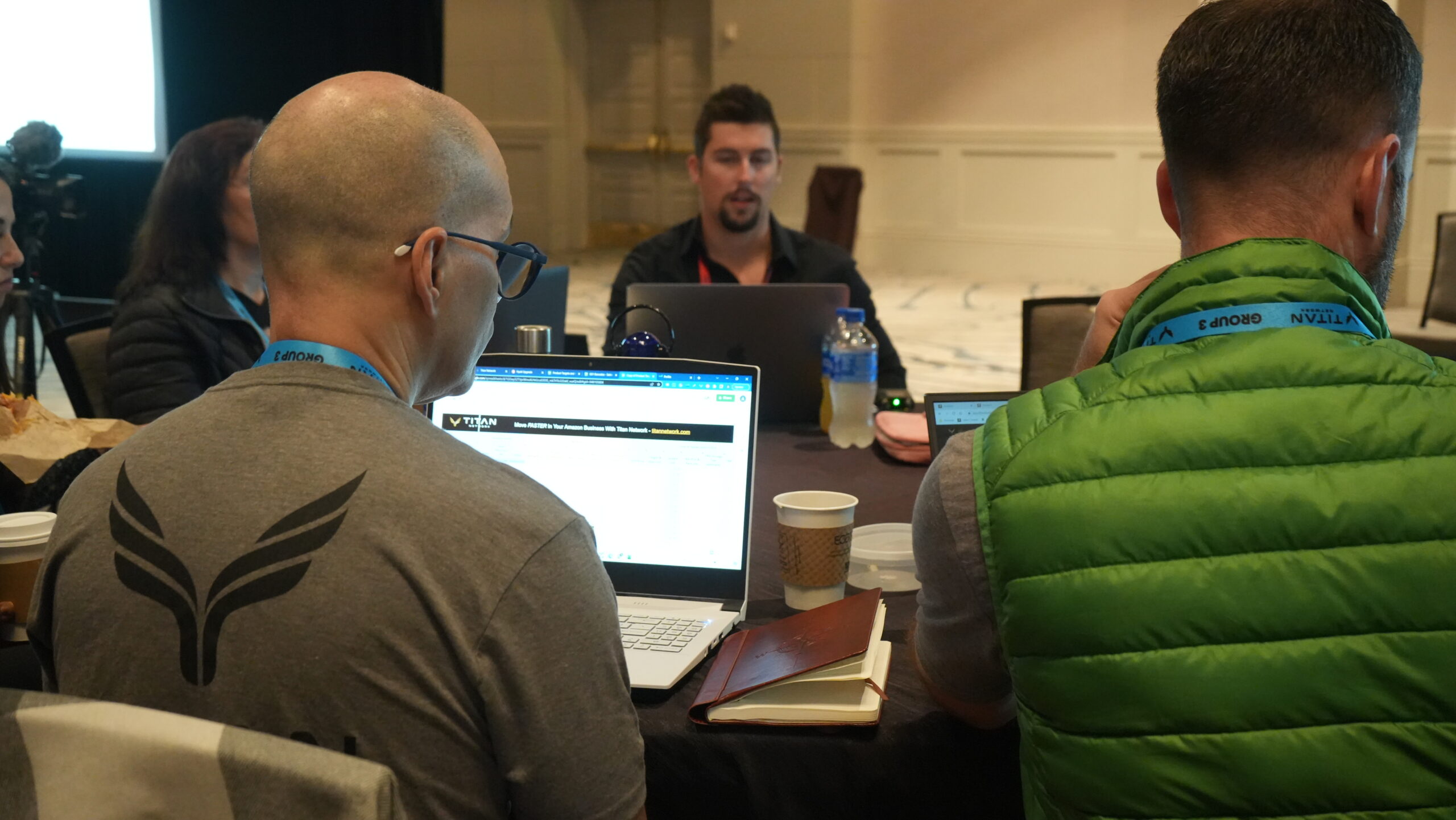
Individual optimization efforts hit natural limits without peer accountability and proven frameworks. Titan Network members access battle-tested SOPs, real-time market intelligence, and collaborative problem-solving that accelerates profit improvement beyond what’s possible through solo execution.
Our systematic approach to what can i sell to make money eliminates guesswork through data-driven frameworks, operational templates, and accountability partnerships. Members consistently achieve 25-40% EBITDA improvement within six months because they’re implementing proven systems rather than experimenting with untested strategies.
The difference between profit leaders and struggling sellers isn’t access to opportunities, it’s systematic execution of high-impact activities with peer support and expert guidance. Stop operating in isolation. Your next profit breakthrough requires community, systems, and accountability that compound success over time.
Frequently Asked Questions
What types of products offer the highest profit margins for Amazon sellers in 2025?
In 2025, private label bundles with 25% or higher net margins lead physical product profitability, while digital assets like templates and courses yield 80%+ profit margins. Knowledge-based consulting services also represent a high-margin opportunity by leveraging your expertise without inventory costs.
How can Amazon sellers optimize inventory to maximize EBITDA per SKU across multiple platforms?
Focus on EBITDA per SKU rather than pure sales velocity by analyzing profit contribution across all channels. Implement inventory allocation strategies that prioritize high-margin SKUs and use data-driven forecasting to reduce holding costs and avoid stockouts, thereby improving cash flow and operational efficiency.
What are the advantages of selling digital assets like templates and courses compared to physical products?
Digital assets offer minimal fulfillment costs and near-zero inventory risk, resulting in profit margins exceeding 80%. They scale easily without additional operational overhead and provide recurring revenue potential, making them a powerful complement to physical product lines for margin expansion.
How does rapid-turn seasonal arbitrage work as a strategy for making money on Amazon?
Rapid-turn seasonal arbitrage capitalizes on time-sensitive demand spikes by sourcing trending or seasonal products at low cost and quickly flipping them on Amazon. This approach drives fast cash flow with minimal inventory holding, but requires precise market timing and agile supply chain execution to maximize short-term EBITDA.